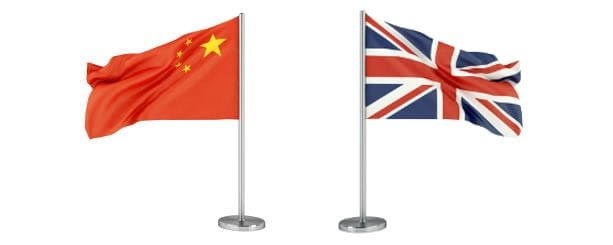
Thursday, July 14, 2016

Slowing China Economy Ripples Into Laos


A slowing in China’s economy is having rippling effects on Laos, which has been described by the World Bank as having “once of the fastest growing” economies in the East Asia and Pacific region.
A decade long mining boom, combined with a rapid development of hydropower, has seen Laos’ growth rate reach over 7 percent a year, allowing national output to more than double, generating some half a million jobs.
A key player in the economic progress has been China. A recent World Bank report on the Lao economy noted China’s influence was continuing to grow.
China is the leading investor, with $6.7 billion in 760 projects from mining, to energy, agriculture, banking and trade as well as construction of commercial properties. 
In 2015, China accounted for more than 40 percent of Laos’ public external debt, up from 35 percent three years earlier, with the funding focused on infrastructure and power projects.
Slowdown 
But signs of a spillover from a slowing in China’s economy has come in a downturn in bilateral trade, according to senior Lao officials. Two-way trade accelerated from just $1.3 billion in 2011 to reach $3.6 billion in 2014. But it slid to $2.78 billion last year. 
Laohoua Cheuching, a senior official in the Ministry of Industry and Commerce, recently told Lao media that new initiatives are needed to stem the slowdown.
Laohoua said the downturn was due in part to a slowing global economy. Lao exports to China focus on mining and agriculture, especially rubber, while key imports are machinery and electronic equipment.
“We have to find new products to export to offset the loss. If not the value of our exports to China will decline further,” Laohoua told the Vientiane Times.
The World Bank has also raised concerns over the slowing China economy that “may effect some potential investment on pipeline projects that do not have secured financing.”
China is also a key investor in real estate. In Vientiane, Chinese owned commercial buildings stand developed or under construction. This includes the $1.6 billion That Luang Lake residential and commercial complex covering 365 hectares.
In December last year, Chinese and Lao officials witnessed the “ground breaking” ceremony for a 427 kilometer $6.04 billion high speed rail line from Vientiane to the Chinese border. The project, requiring 100,000 Chinese workers, was the mainstay of former deputy prime minister, Somsavat Lengsavad.
But Vientiane-based analysts told VOA the project’s cost and the departure of Somsavat from the government has created some uncertainties about the project.
Diversification
Analysts say Laos’ dependence on China and narrow industrial revenue base of hydropower and mining leaves the Lao economy vulnerable.
Asian Development Bank (ADB) senior country specialist, Shunsuke Bando, said Laos has to diversify especially amid rising competition from the ASEAN Economic Community (AEC).
“The economic structure is heavily reliant, heavily dependent on mining, electricity. So in this context the country has to diversify its economic structure,” he said.  
“They have to expand their industrial bases, such as textile garments, food processing and so on – is more important for this country’s future,” Bando told VOA. 
The ADB says growing regional competition, a weak industrial base and human resource skill shortages are undermining the Lao business sector. 
“They are lacking and running short of skilled workers. Even the low level workers, their skills are very low compared to other countries,” Bando said.
Faced with economic uncertainties, Lao Prime Minister Thongloun Sisolith has moved to strengthen regional business and economic ties, signing key trade agreements with Cambodia and Thailand during recent official visits. 
Pavida Pananond, a professor of international business at Thammasat University in Bangkok, said Thongloun’s strategy appears to be directed to building on Laos’ regional connectivity. 
“It’s not surprising that the Lao Prime Minister would now be trying to change the perspective that this is a land locked country but a land linked [one] because he wants to make use of regional integration,” Pavida told VOA.
Signs of success in diversification are starting to emerge. Laos has in place more than 10 special economic zones throughout the country, with 200 registered businesses in different stages of development.   
The economic zones largely focus on entertainment services, logistics as well as manufacturing and commerce, employing more than 11,000 workers, 60 per cent of whom are foreign. 
ADB analysis says Laos is expected to be “well positioned to tap on new market opportunities arising from deeper ASEAN integration”. 
“Deeper integration could accelerate growth and development and contribute to achieving Lao PDR’s goal of graduating from least-developed status by 2020,” the ADB said.
xxxxxxxxxxxxxxxxxxxxxxxxxxxxxxxxxxxxxxxxxxxxxxxxxxxxxxxxxxxxxxxx
Great offer for you......... If you are entrepreneurs or want to be one.... or you are knowledge thirsty person....

This book is a must have on your list..........

Just for USD$15 you can have the overall knowledge about venturing into China and its supplying markets.  

So many people are benefiting from this book.. Why not you? They are making Millions of Dollars every single day of you siting and thinking about doing somethings...  Invest in just a small amount to get so many insight about China markets.. 
Yiwu is the biggest Wholesales Market in the world. If you want to venture into China, Yiwu is the first place you want to visit. So many things that you can see, learn, find there... Trust me, you'll never get lost if you have this book with you......
Don't wait until tomorrow........ Act now..
Contact us: +60126694217 (Call/Whatsapp) 
Email us: alveolegame@gmail.com 

Get your copy now... Available on Both E-Book and Hard Cover Format...
Shipment all around the world via DHL/FEDEX/UMS


Friday, July 1, 2016

Import from China to the UK: A Complete Guide

You are reading ChinaImportal's Newsletter!


United Kingdom

About to Import products from China to the United Kingdom? Eager to know how the ‘Brexit’ will affect your business?
Read this guide to learn what you must know about product regulations, labelling requirements, import duties and VAT in the United Kingdom.
We also explain why UK based importers should not worry too much about the country’s departure from the European Union. Well, at least in the mid to long term.

Important Note: As of now, this guide applies to importers in all EU member states. Thus, the UK is interchangeable with any other EU country. That is, of course, until we create an updated version of this country guide in 2018.

British Product Safety Regulation

As the United Kingdom is (still) part of the European Union, EU wide standards and directives are mandatory.
Below follows an overview:

REACH

REACH regulates chemicals in all consumer products sold within the United Kingdom, and all other EU member states.
Products covered by REACH includes, but is not limited to, the following:
  • Clothing and textiles
  • Toys
  • Electronics
  • Furniture
  • Product packaging
Importers don’t need keep track of which substances are regulated (new chemicals are added regularly).
Instead, you only need to refer to “REACH”, when communicating with both suppliers and testing companies.
While REACH compliance is always mandatory – third party testing is not. That said, a non-compliant product must be removed from the market.
The only way to be sure that your product does comply, is by submitting batch samples to a laboratory.

CE Directives

CE marking is mandatory for many product categories sold in the United Kingdom, including the, but not limited to, following:
  • Toys
  • Electronics
  • Machines
  • Medical devices
  • Construction products
There is not a single “CE marking directive”. Instead, there are more than 25 different directives that all requires CE marking.
One or more CE marking directives may apply to one single product. Take a Bluetooth speaker ,for example, which must comply with the following:
  • R&TTE Directive
  • Low Voltage Directive (LVD) Included in R&TTE
  • EMC Directive (EMCD) Included in R&TTE
  • RoHS
The CE mark itself is not enough to ensure compliance. If you are importing products from China to the United Kingdom that must be CE marked, you need to gather a full set of documents:
  • Declaration of Conformity
  • Test reports (although third party testing is normally not mandatory)
  • Product photos, design drawings and BoM (Bill of Material)
  • List of applicable directives and standards
  • Risk assessment
Don’t expect much help from your supplier, as it’s not their job to ensure compliance with UK regulations.

RoHS

RoHS restricts heavy metals, such as cadmium and lead, in electrical components and solder. Compliance is mandatory when importing electronics to the United Kingdom, and all other EU member states.

EN 71

EN 71 is a toy safety directive. In fact, it’s part of the “CE marking directives”.
Compliance is mandatory for all toys, and often recommended by industry experts for all children’s products.
EN 71 is split up in more than 10 sub-parts, and covers chemical restrictions and physical properties (i.e., seams and sharp corners).

Food Contact Materials

Kitchen utensils and food packaging are regulated by Regulation (EC) No. 1935/2004.
UK based importers of FCM (Food contact material) products must issue a Declaration of Conformity, and are recommended to submit batch samples to a third party testing company.

British Labelling Requirements

CE Marking

As mentioned in this article, CE marking is mandatory for products that fall within one or more EU product directives.
The CE mark must be applied to the product unit, and its packaging.

WEEE Marking

WEEE marking is mandatory for electronics, and must be affixed to the product packaging.

Textiles Labelling

The United Kingdom has a set of mandatory textiles labelling requirements, which covers the following:
  • Fiber composition
  • Care instructions
  • Language

Customs Duties

Most products imported from China to the United Kingdom are taxed by an import duty.
The import duty is normally paid upon arrival, either directly to the HM Revenue & Customs – or, through a freight forwarder.
You can click here to access the official UK database of all trade tariffs

Customs Value

The import duty is calculated as a percentage on top of the customs value:

Import Duty = Customs Value x X.X%

In the United Kingdom, and all other EU states, the customs value is normally based on the CF value, which includes the following:
1. Product value (as paid to the supplier)
2. Transportation cost to the United Kingdom (but not transportation costs within the UK or other EU states)
3. Transportation insurance
The UK customs value may, depending on the situation, also include the following costs:
1. Tooling costs (paid to the supplier)
2. Design and other service fees (paid to the Chinese suppliers, but not domestic service providers)
3. Product samples (paid to the supplier)

Value Added Tax (VAT)

The standard VAT rate in the United Kingdom is currently (2016) set at 20%.
When importing goods from China to the UK, VAT is paid to the HMRC – or through the freight forwarder – upon arrival.
The VAT rate is calculated on top of the sum of the Customs value and the import duty. Below follows an example:

VAT amount = 20% x (Customs Value + Import Duty)


Case Study: UK Import Duty and VAT Calculation

Cost / TaxCalculation (£)Sum (£)
Customs Value (CIF)1 x 20,000£20,000
Import Duty (6.5%)6.5% x 20,000£1300
VAT (20%)(20,000 + 1300) x 20%£4260
Total20,000 + 1300 + 4260£25560

EORI Number

The EORI (Economic Operator Registration and Identification) number is mandatory for all UK based importers.
You can apply for an EORI number directly on the HMRC website.
The EORI number application is free, and normally takes 2 to 4 working days. However, make sure to apply before you order products from Asia, including product samples.
Without an EORI number, the customs are likely to put a temporary hold on incoming shipments (both container cargo and product samples).
Hence, an “early” EORI number application can help you avoid delays.

Import Licenses and Permits

For most products, British importers don’t need any Import license or special permit. However, special requirements applies to products that fall within any of the following categories:
  • Chemicals
  • Pharmaceuticals
  • Other medical products
  • Agricultural products
  • Live animals or plants
  • Chemicals
Hence, the average Amazon seller or Ecommerce companies don’t need to worry about obtaining any permit.

How will ‘Brexit’ affect product standards, customs duties and other import regulations?

We decided to put this article on hold until after the referendum – and here we are. The United Kingdom is set to leave the European Union.
The United Kingdom is fully integrated with the European Union, which has the following impact for importers:
a. All EU product directives apply in the United Kingdom. As such, British importers can simply refer to well established EU standards and regulations.
b. Import duty rates are harmonized throughout the EU. Hence, UK importers pay the same import duties as those based on other EU member states.
In addition, EU companies and individuals don’t need to pay import duties when buying products from UK sellers.
c. VAT applies in all EU states, including the UK.
At the time of writing, it’s too early to say what this means for import businesses in the United Kingdom. The short term effect is felt by the rapid depreciation of the British Pound.
However, with at least 2 more years to go as an EU member state, the mid to long term prospects are still unclear.
That said, it is extremely unlikely that the United Kingdom would opt out of the EU product regulatory framework. The UK alone is too small of a market to support implementation of its own product standards.
In addition, the UK will most likely have access to the EU single market in the future, which means that customs duties and the VAT system will be aligned with the rest of Europe.
The more things change, the more they remain the same.

Do you have more to say about Importing from China to the United Kingdom?

Did we miss anything? Do you have more to say about this topic?
Don’t hesitate to write a comment in the field below. We read and respond to comments on a weekly basis.


Hey, we've got an offer for you... Just for USD$15.
This guidebook will be yours together with a chance to win a full boards trip to Yiwu, China to meet with the world largest suppliers of everything.....

No matter where you are in the world, we will get you there....
Get your BONANZA tickets when you purchase this book. Delivery all around the worlds by DHL/Fedex/EMS.

Contact us at: +60126694217 (Call/Whatsapp/Wechat)
Email us: alveolegame@gmail.com


This book is a complete references for anyone no matters what. It helps you with your destinations, buying, sending goods or just being a tourist. You will be guided. 

We are the experts when it come to doing business with China suppliers etc. Travelling through China will be more easy and more satisfaction when you know what to do, how to do it and knowledgeable about it. 


Tuesday, June 21, 2016

Buying in Asia and Selling On eBay & Amazon: By Mike Michelini

You are reading ChinaImportal's Newsletter!


Mike-Michelini

Mike Michelini (LinkedIn) is a serial entrepreneur from New York. After a few years on Wall Street, he moved to Shenzhen – a place he has called home for close to a decade already.
Mike is a veteran, and that’s why you don’t want to miss this piece. Keep reading, and learn how Mike built his five figure bar accessory online businesses on Amazon and eBay – from the ground up.

Michael, tell us a bit about yourself and how you first started your business

I always wanted to do my own business, but first took a job on Wall Street after college. Immediately I was finding ways to make money online and started to sell anything I could find on eBay and my own websites.
Fascinated that I could wake up to sales in my account, I studied internet marketing via forums.
Found a niche in the bar products industry, and moved up the warehousing from a Manhattan walk up apartment to a full service fulfillment company (fraternities, friend’s basements, and UPS stores in between).
Building up sales enough to quit the day job in 2007, I was happy to do this full time. As I was buying products from China, I took my first trip at the end of 2007 to see trade shows and factories.
After an intense jaw dropping experience, I decided to spend more time in China and am still here to this day.

How come you decided to start importing bar products?

Wish I could say I had a better formula, but really was selling anything I could find. Picked various product lines I personally liked and saw which one did well.
There wasn’t much competition on eBay and was able to really get into the rankings. Made a full site for the bar products line and grew out the supply chain.

How did you go about to find suppliers for the products?

Started with US wholesalers, via Google searches and manually contacting them. Getting pricing lists and samples. Some would drop ship, others forced us to take inventory.
As we grew, we went full inventory and started searching on Alibaba and Global Sources.
Was like a shot in the dark, up late in NYC, chatting on Skype with factory sales reps, sending photos back and forth, getting samples.
Starting with small quantities – some products we still would buy from American wholesalers and others direct from China, India, and Thailand.
It was a school of hard knocks for sure – just getting in there, testing the waters with small orders, getting good ones, throwing out the bad, and growing with it.

Do you recommend visiting a Trade Fair in Hong Kong or Mainland China – or can everything be managed from overseas?

Well, I had been buying from China without ever going – so sure, I was using the online directories.
But coming to the trade shows was like night and day. It was basically as if the online directories had people inside of them!
You could still search through the catalogs and websites- but leading up to the trade show, I would ask the factories if they were going to the shows. I would note down where their booth would be and meet them in person.
Even with all this amazing online technology, it is nothing like meeting someone face to face.
Maybe that will change once VR is further developed – and can go into a virtual conference – but for now – nothing beats meeting people in real life.
It makes the transactions seem real.

Did you buy from a large network of suppliers, or just a few?

The tricky part about bar products is there are so many different styles of products and materials. There are plastics, and then there are metals.
I was trying to find the source, and I quickly learned that most factories were actually trading companies.
The factories were dispersed in Zhejiang province and I went to them.
What I learned is it was down to who had the mold. Factories would buy from each other to complete their product line – but to really get the right product from the right factory you had to buy from a network of factories.
To add to the complexity – the metal bar products (tins, strainers, ice buckets) came from India. China is actually stronger in injection mold, plastic – not in things like metal and wood.
Also found a couple factories in Thailand that had quite a bit of products.

And… how much time did it take to build up?

Started the site at the end of 2004 – within a few months we were making 10,000 USD a month, and took about a year to get about 20,000 – 30,000 USD a month (depending on season).

What kind of sales channels did you use?

We were using a multitude of channels – first getting cash flow from eBay sales, then using Google Adwords to our website to get website sales.
Organic search was awesome but really think it was about a year (I was leaning it on my own) before we got organic traffic.
The best memory I have is my first Adwords campaign I set up, the 2nd click brought in a 75 US dollar sale! Was almost all nickel bids too.
Amazon we started later in the game, maybe in 2006 we started listing there, but the majority of our sales came from eBay, our website via Adwords and Organic traffic.

Did you exclusively sell on Amazon and eBay, or did you have other sales channels too?

Mostly Amazon and eBay. We did get some retail mom and pop shops who found us online. We also used some manufacturer sales reps in a campaign we did in 2006 to grow offline sales.
I hinted earlier, we had trouble finding a dropship source for bar products – so we became the dropship source.
We launched a drop ship program also in 2006 and built up a network of over 50 drop shippers and using a white label system in our back end.

Did you ever have to deal with scams or quality issues?

Shipped about 300 US dollars of shirts to Africa. We went a bit too crazy on automating the systems and didn’t have proper checks in place.
Also a close call we had an order for a couple thousand dollars shipping to the Caribbean with a US credit card.
Well, it shipped, but it was a real order.
He had to fax us his credit card statement for the bank to give us the funds, so things went along happily ever after.
One of the scariest situations was a lemon squeezer order.
One piece to a woman in the Midwest, she said when she used it the spring broke and gauged her palm open.
She was threatening us. I asked our other team members what we should do – and decided to immediately issue her a full refund (8 USD).
Wondering what would happen next, she thanked us so much for the free product, gave us 5 stars on eBay and the problem was solved.
That one had me researching product liability on google for a couple hours. Phew!
Luckily, those are, the bigger issues we had – of course a bunch of savvy online buyers asking for the free product saying some quality issues.

You’ve been based in Shenzhen for close to a decade. Do you think it’s become easier to deal with Chinese suppliers since you first arrived?

Being here definitely helps, but doesn’t make the issues completely go away.
Took me a few years of knowing what to look for. I also have a firm grasp on where the factories are, and I now even can find people who live in the area and can stop by for me.
When the factory knows you are in the area, they seem to pay a lot more attention to your orders. That saying – out of sight, out of mind – comes to play.
But then again, factories in China have advanced quite a bit in the 10 years I have been here and know what Western buyers want – so that is also a factor.

Are they harder to deal with? Or the opposite?

Much easier to deal with. You can get to know them, chat with them while they are awake (no time zone issues) talking to them about their family, their personal life and experiences.
They don’t get to know most of their buyers this closely so it definitely sets you apart.

Thanks Michael. Please tell us more about your current ventures.

I started blogging when I quit Wall Street in 2007 – for some reason I was afraid to blog while working in corporate – thinking something with compliance would come to bite me and get me fired.
So the blog started for my friends and family to be able to follow my travels and business updates – mikesblog.com now – still going strong!
What I realized, I am passionate about the online marketing, about connecting people, and international business – so in 2013 I startedGlobalFromAsia.com as a blog and podcast to help business owners set up their international businesses via Asia.
And just recently I became partner at EnterChina.co – an online community of entrepreneurs who are working to take their product ideas and launch them to the market.

Are there any conferences or events coming up this year where people can find you?

Sure, had a great crossbordersummit.com this past April and will do that yearly in Shenzhen. Working on day trips in China from Hong Kong and continuing to bridge the divide of business between China and the world.

  Get your copy now... Best Seller 2015 and updated version 2016.... 

Only for USD$15...  you will earn so many knowledge about doing business with China.......
Available in E-Book and Hard Cover Formats. 
Worldwide.......


Conatct us Now: +60126694217 
Email: alveolegame@gmail.com


Wednesday, June 15, 2016

VAT on Imported Goods from China: A Complete Guide

You are reading ChinaImportal's Newsletter!


VAT on Imported Goods from China

Importers based in the European Union must pay Value Added Tax (VAT) on top of the Customs value. In this article, we help you navigate the complexities of ‘Import VAT’ when buying from China.
Keep reading, and learn more about VAT calculations, and whether or not Import VAT is deductible.
We also explain how and when you declare and pay VAT, and much more.

What is Value Added Tax (VAT)?

VAT is a consumption tax in the European Union. In B2C transactions, VAT is always included in the price. If you, for example, buy a product online from an EU based online store, the price you pay includes VAT.
The seller can then offset the VAT it ads on its sales, to the VAT it paid to other other EU businesses, when buying products or services.
Below follows an example:
  • Sales: $10,000 (Including VAT, 20%)
  • Expenses: $5,000 (Including VAT 20%)
This allows us to make the following calculation.
  • Sales VAT: $2,000
  • Paid VAT: $1,000
  • Total: $2,000 – $1,000 = $1,000
Thus, I would need to pay $1,000 of VAT. If I’d spent more on VAT than I added on top of my sales, I would instead get money back from the state.
However, when importing goods from China, you can’t pay the VAT directly to the supplier. Simply because Chinese businesses belong to a different tax system, and are not VAT registered in the EU.
When importing products, the same principle applies. If you pay more VAT on your imports than you add on your sales, you’ll get a refund.

What is a Customs Value?

As the VAT calculation is based on the Customs Value, you need to be familiar with this term to understand the examples provided in this article.
In the European Union, the Customs Value is the total sum of the products (including development costs paid to the supplier) and shipping to the border.
Below follows an overview:

Always included in the Customs Value
  • Product cost (as paid to the supplier)
  • Insurance
  • Shipping cost to the Port of loading
Sometimes included in the Customs Value
  • Tooling and molds
  • Product samples
  • Design services (and related development services) paid to the supplier in China
Not included in the Customs Value
  • Transportation fees within the EU
  • Fees and services paid in the Port of Loading

Do I need to pay VAT when importing from Asia to the EU?

Yes, importers must pay VAT on top of the total sum of the Customs Value and the Import Duty.
VAT is paid to the state, in the country of entry and according to the local rate.
If I import goods to Spain, I pay VAT in Spain, according to Spanish VAT rates. If I am based in the UK, I pay the UK rate, to the HMRC, and so on.

How can I calculate the amount of VAT I must pay?

Yes. However, before you can do that you must know the following factors:
  • Customs Value
  • Import Duty Rate
  • VAT Rate
Below follows an example:
  • Customs Value: $10,000
  • Import Duty: 5% ($500)
  • Sum: $10,000 + $500 =$10,500
  • VAT Rate: 20% (UK Rate)
  • Total VAT: 20% x $10,500 = $2100
  • Total Amount: $10,500 + $2100 = $12,600
What is the VAT rate in my country?
So far, each EU member state sets its own VAT rate. Each state can also set different VAT rates for different products or services – or even implement exemptions (0% VAT).
However, most products are taxed according to the standard VAT rate. You can find a full list here, or see the list below for a few EU states:
  • United Kingdom: 20%
  • Sweden: 25%
  • Italy. 22%
  • Germany: 19%
  • Netherlands: 21%

When importing from China, how and when do I pay the VAT?

There are two ways to pay VAT when importing goods from China:

a. Pay VAT upon arrival in the Port of Destination

Most Freight forwarders offer Customs clearance as a paid service. As such, they help you declare Customs duties and VAT to the local authorities.
The Freight forwarder invoice the buyer for the total amount (Import duties and VAT).

b. Declare the amount of Imported goods on the quarterly or yearly VAT declaration form

All VAT registered companies in the European Union must fill in a quarterly or yearly (sometimes even monthly) VAT declaration.
In the VAT form, there are fields for declaring the total amount of Imported goods, from which the local tax authorities can calculate a VAT amount.
The benefit is that the importer can then offset this amount directly from the amount of “sales VAT”.

Can I deduct the VAT amount paid?

Yes, the amount of VAT you pay on your imported goods can be subtracted to the amount of VAT you shall pay on top of your sales invoices.
Example:
Company A is based in the UK and imports products valued at $20,000 from a supplier in Hong Kong. During the first year, they only manage to sell goods valued at $15,000. This gives us the following:
  • Sales VAT: $15,000 x 20% = $3,000
  • Paid VAT: $20,000 x 20% = $4,000
  • Balance: $3,000 – $4,000 = -$1,000
Given that they’ve already paid in more than the amount they are owed, Company A is eligible for a VAT refund. However, this may be reduced to zero in some cases.

Do I need to pay VAT when buying product samples?

Yes. There are two ways VAT can be paid on product samples:
a. Upon arrival in the EU member state
b. Declared as part of the Customs value of the first shipment

Are there any exemptions for importers?

Some EU member states set VAT thresholds between 10 euros to 22 euros. Hence, small sample orders may pass through without VAT being added.

Do the Customs authorities add VAT to every shipment?

No, it’s up to the importer to properly declare the value of the imported goods in the quarterly or yearly VAT declaration.

Do you have more questions about VAT when importing from China to Europe?

Write your questions in the comment form below, and we will add them to this article.


Get your own copy now for just USD$15 and stand a chance to win you free trip to YIWU, China.... 

Contact us at: +60126694217(Call/Whatsapp)
Email us: alveolegame@gmail.com


Get the best guide book now.....


Tuesday, June 7, 2016

The Future of Manufacturing in China: 3 Big Trends

You are reading ChinaImportal's Newsletter!


future of manufacturing in China


“It’s only a matter of time before Chinese suppliers take over on Amazon. Who needs a middleman”
“China doesn’t need manufacturing any longer. They are going all in on credit cards and shopping malls”
And so it goes. Self-proclaimed experts, trying to predict the future. However, if anyone is qualified to make a prediction of the future state of manufacturing in China, that would be me.
In this article, I explain why, on one hand, China will remain a manufacturing powerhouse – and on the other, why you shouldn’t worry about your supplier stealing your market share.
I’ll also show you why branding and marketing expertise is actually more important than the product itself, in a world where manufacturing is becoming increasingly accessible – even to the smallest business.

1. Production will remain in China, despite increasing costs

Chinese suppliers are facing increased costs: Rising wages and rent hikes all contribute to reduce the already slim, profit margins of the average assembly manufacturer.
In addition, the government is also becoming increasingly efficient in collecting taxes. This is another ‘cost’ that some suppliers must start to add into their pricing.
Some manufacturers have already left, for example, in Vietnam and Cambodia.
So I guess this is it then. Game over. China is rapidly deinstruliaising to focus on the “consumer market” and Chinaimportal.com is destined for eternal obscurity.
Not so fast…

A couple of years ago, the talk was all about how Chinese suppliers would depart from the east coast and head in droves to the inland. That didn’t happen.
Instead, China’s East Coast grew into an even stronger manufacturing base. Shenzhen is the brightest shining star, and has cemented its position as the World’s center for manufacturing.
To me, that was rather expected. Shenzhen has today grown into an ecosystem that cannot be simply transplanted.
This is where you have the logistics companies, the component manufacturers. Increasingly, this is also where you find the manufacturing expertise needed.
So, what’s the conclusion?
China is losing out in some areas, but gaining in others. It’s not a coincidence that China becomes the manufacturing hub it is today, while Indonesia and India didn’t make that transition.
Things will change, though.
The future manufacturer in China is will mostly be ‘staffed’ by low cost production robots.
Inefficient manufacturers will also disappear, and give more room to those that embrace this change. That said, I don’t think that, for example, the Wristwatch or LED industry will ever be dominated by a few large producers. The future doesn’t necessarily favor corporations.
In the medium to long run, China will lose its cost advantage entirely, compared to the US, EU and Japan, due to cheap robotics, AI and 3D printing. But that’s at least two or three decades away.

2. Manufacturing is becoming as accessible to Startups and Small Businesses, as Software development

Manufacturing used to be something that required huge investments. It was certainly nothing for college students considering, until just about a decade and half ago.
Chinese suppliers are OEMs. Essentially, they are ‘Open Source Manufacturers’.
Chinese suppliers don’t care who you are, or what you sort of background you have. All they are interested in is your business. If you ask me, that’s a great thing.
Basically, the Chinese OEM factory made manufacturing accessible. A bit like the PC or Mac back in the 90s.
Until recently, international trade has been stuck in the past. Alibaba and Global Sources took suppliers online, but that didn’t solve every problem facing importers.
That is about to change, though, as supply chains come digitally. An entire ecosystem is coming into place, for companies of all sizes.
Today, a product can get financing on Kickstarter. Then, Alibaba comes in with their Trade Assurance program to secure the transaction with the supplier.
Once ready for shipment, just book a quality control online at Sofeast.com, and get a free shipping quote from Flexport – directly delivered to an Amazon FBA warehouse.
In the last few years, the entire supply chain has moved online, and this is just the beginning.
Product compliance is also becoming a lot more manageable, thanks to new services and devices that are set to drastically cut the cost to ensure compliance with relevant safety standards and labelling requirements.
Just buy a requirements list on ProductIP.com, and test your product for free using your Scio Pocket Molecular Sensor. The latter must be seen to be believed.
Soon, the days when you had to pay 500 dollars to test one fabric in one color belong to the past.
What’s next? Visiting the Global Sources Trade Show from your VR headset?

3. Importers will need to excel at branding and marketing to stay in business

As manufacturing becomes accessible to (almost) everyone, the market is becoming flooded with products.
The core of every business is the product, or service, it sells. However, a product is only as good as the marketing and sales processes that supports it.
The future belongs to those businesses that can not only bring a product to market, but also master the art of product branding, customer service – and online marketing.
In fact, these skills are combined more important than the product itself.
This has been proven, by the failure of Chinese suppliers to break into western markets and cut out the importers.
Many Chinese factory owners arrogantly assumed that they had the upper hand, given their direct access to production. Why not just leave the importers out in the cold and sell directly on Amazon?
They did, and for most it didn’t work out.
What makes a business successful in the OEM manufacturing game is irrelevant when selling on Amazon, and other B2C online channels.
Considering that many suppliers struggle to respond to emails within a week, they are nowhere near having the ability to last more than a month on Amazon.
That said, the younger generation in China has a much better understanding of branding, and the importance of solid customer service.
The question is how much of an advantage they will have in the future, given that they have better access to manufacturers than their American and European competitors.
That advantage is not negligible, but an understanding of the target market has been always more important, than an understanding of the supplier that makes the product. This holds true, regardless of where in the world you do business.
If anything, future competition will come from the ‘forced entrepreneur’ – a byproduct of the large number of people being left behind by automation and AI.


Get your copy now only for USD$15

everything you needed to know about doing business in China or with China are available here. 


Contact us: 
+60126694217
alveolegame@gmail.com

"Best Seller Guidance Book 2015" 

RIJAL A SHUKOR