Monday, October 5, 2015

Pohon Cherry Grill


Underwear & Lingerie Manufacturers in China: A Complete Guide

You are reading ChinaImportal's Newsletter!

IMPORTANT: If you don't see any images in this message, be sure to click the "Show Pictures" link in your email reader. Thanks!
Follow on LinkedIn Follow on Google Plus Follow on Facebook
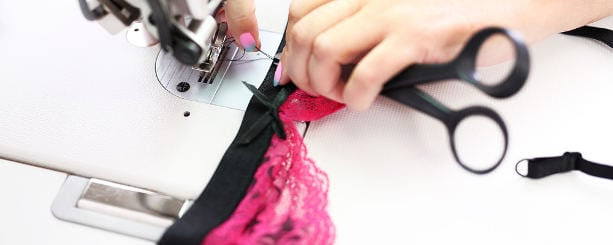

underwear manufacturer
In this product guide, we explain everything you must know about Underwear & Lingerie Manufacturers in China, including industrial clusters, supplier qualification and design customization options. We also explain what you must know about potential quality issues and applicable labelling requirements – and substance restrictions in the United States and the European Union.

Underwear and Lingerie Manufacturing Clusters in China

China’s export oriented underwear manufacturers are largely concentrated in the country’s primary textiles production centers; Guangdong Province, Fujian Province and Zhejiang Province. If you intend to visit manufacturers in Mainland China, you are likely to find yourself in one of the following cities:
  • Quanzhou, Fujian
  • Jinjiang, Fujian
  • Shantou, Guangdong
  • Guangzhou, Guangdong
  • Dongguan, Guangdong
  • Zhongshan, Guangdong
  • Yiwu, Zhejiang

Qualifying Manufacturers

Underwear and lingerie is, in relative terms not a very capital intensive industry. Manufacturers in such ‘low value added’ industries then to be rather unsophisticated, thereby requiring a rigid Quality Assurance (QA) process, managed by the buyer.
The first step of the QA process is, as explained below, to draft a comprehensive product specification. There are, however, certain useful signals for qualifying Underwear and Lingerie Manufacturers:
  • Business Scope (As specified on the manufacturers business license)
  • Registered Capital (As specified on the manufacturers business license)
  • Substance Test Reports (i.e., REACH and Oeko Tex Standard 100)
  • Quality Management System / Production Lines Audit Reports (i.e., ISO 9001:2008)
  • Social Compliance Certification / Audit Reports (i.e., Sedex and BSCI)
  • Environmental Audit Reports (i.e., ISO 14000 series)

What to Include in The Techpack

a. Design Drawing
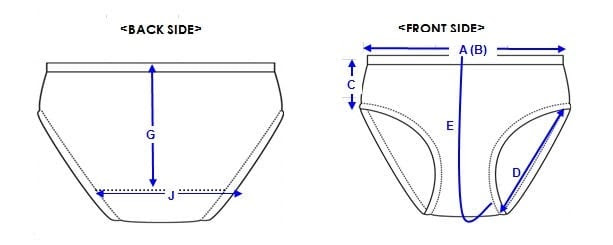
underwear design drawing
The product design can either be based on an existing ODM SKU, or an OEM specification. While you may submit, or submit, reference samples – they are only complementary to the design drawing. These are your options:
  • OEM: Design drawing submitted by the buyer
  • ODM: Design drawing submitted by the supplier
The design drawing must include all design elements and dimensions.

b. Reference sample

A reference sample is either provided by the supplier (when buying ODM products), or the buyer (when buying an OEM product). As mentioned, the reference sample is only complementary to, and not a replacement for, a design drawing.

c. Fabric

The most straightforward method is to order fabric samples, or complete units, from the supplier. The buyer can then freely select the material of choice from the supplier’s standard catalog. Another method is to submit fabric samples, that the supplier can match with a fabric from their own standard catalog – or, in rare cases, weave the fabric entirely according to the specifications of the buyer.

d. Size Table

The size table is an appendix of the design drawing, listing dimensions for each size. ODM products can also be customized by adjusting the size table accordingly. The size table must also be complemented with dimensional tolerance

e. Labels

Underwear and lingerie are subject to general textiles labelling requirements. Said labelling requirements differs between markets, and buyers are unwise to assume that the supplier is aware of the specific requirements in your market. Hence, you must provide ‘ready made’ graphical files (.aiformat) to the supplier. Include the following:
  • Label dimensions (i.e., 15 x 30 mm)
  • Country of Origin (required in the United States)
  • Washing Instructions and/or symbols
  • Batch ID
  • Logo / Website
The label can be printed on a double folded polyester patch, or directly on the inside fabric.

Quality Assurance

a. Common Quality Issues

Quality issues in textile manufacturing often stem from an incomplete or conflicting product specification. Below follows a list of common quality issues when buying Underwear and Lingerie:
  • Incorrect dimensions
  • Incorrect component position (i.e., double fabric)
  • Incorrect / low quality materials
  • Incomplete seam lines
  • Dirty and damages

b. Quality Control

The purpose of the quality inspection is to defect quality issues before the produce is packed and shipped. When buying Underwear and Lingerie from Chinese manufacturers, you must draft a Quality Inspection protocolincluding the following procedures:
  • Visual Inspection (i.e., Dirt, damages, seams and printed labels)
  • Dimensions (i.e. Double fabric length)
  • Fabric (i.e., Weight and Washing)

Compliance Testing

Underwear and lingerie are subject to various substance regulations in major markets, primarily the United States and the European Union. Depending on your market, you need to ensure compliance with one or more of the following:

a. REACH (Registration, Evaluation, Authorisation and restriction of Chemicals)

  • Country / Market: The European Union
  • Description: REACH restricts the content of restricted SVHC (Substance of very high concern) in textiles, and other consumer products, sold within the European Union. The list of SVHC includes hundreds of substances, including lead, cadmium and formaldehyde.
  • Read moreREACH Compliance Explained: What Every EU Importer Must Know

b. California Proposition 65

  • Country / Market: California, United States
  • Description: California Proposition 65 restricts more than 800 substances in consumer products. Products must either be compliant (i.e., proven rid of all restricted substances), or labelled accordingly. If your company is based in California, or if you intend to sell to buyers in the state, you must ensure compliance.
  • Read moreCalifornia Proposition 65 Compliance – What US Importers Must Know

c. FHSA (The Federal Hazardous Substances Act)

  • Country / Market: United States (All states)
    Description: FHSA restricts various substances classified as, for example, irritants or strong sensitizers. This includes, among other substances, formaldehyde – a substance used by some textile manufacturers. The full list of mandatory bans and restrictions are available on CPSC.gov.
    Read moreRegulations, Mandatory Standards and Bans (www.cpsc.gov)

Starter Package

Are you looking for reliable suppliers in China? With us, getting started is easier than ever: Click here to learn more.
 

Supplier Screening

Found a supplier on your own? Let us perform an Anti-Fraud Screening before you order: Click here to learn more.
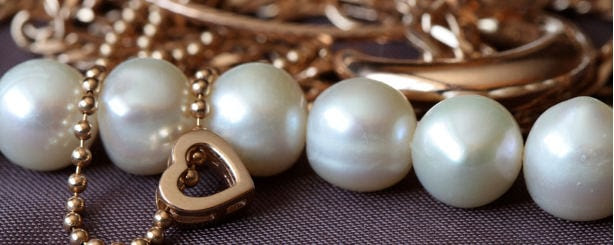
Importing Custom Designed Jewelry from China: A Complete Guide

china_jewellery
In this Product guide, we explain what you must know about buying ODM (Private label) and OEM (Custom designed) jewelry from Chinese, and other Asian, manufacturers. Keep reading, and learn more about product development, sample production and production regulations, applicable to Jewelry. We also guide you through the various labelling and testing requirements.

Product Development Process

1. Jewelry Parts Selection

Most jewelry buyers opt for factory standard components, rather than OEM (custom designed) parts. Most suppliers can, directly or through subcontractors, offer extensive jewelry part catalogs. Hence, you have the following options when designing your products:
I. ODM Products (no design changes): Base your design entirely on the supplier’s existing ODM designs
Customize an existing ODM Product: Modify an existing ODM product by adding or removing parts (i.e., custom designed labels).
II. Custom Design (using ODM parts): Jewellery can be designed ‘from scratch’ using existing ODM parts from the buyers catalog.
III. Custom Design (using OEM parts): Custom designed parts results in high tooling costs, especially when buying a large number of SKUs.
Product documentation must be prepared for each SKU. Making jewelry samples require attention to detail, and key specifications are easily lost in translation. In order to reduce the risk of an endless number of sample batches, prepare the following for all SKUs:
  • 2D Design Drawings (showing ODM parts and position)
  • ODM Parts List
  • ODM Parts Material Specifications
  • Label / Logo Badge and Part Files (.ai format)

2. Pre-Production Samples

Option A: Self Assembled Jewellery Samples

If you intend to design your own jewelry using ODM parts, you might consider buying said parts directly from the manufacturer, rather than assembled samples. This approach can save weeks, and enable you to test new designs in a highly cost efficient way.
The Self Assembled Samples shall then be returned to the suppliers, acting as Pre-Production Samples. However, make sure to order two sets of jewelry parts as you need to keep at least one piece of each SKU for your own reference.

Option B: Supplier Assembled Jewellery Samples

If you on the other hand intend to base the design on the supplier’s existing ODM samples, you should buy assembled samples, rather than ODM components. This also enables you to test the supplier’s attention to detail. However, the samples are only as good as the sample documentation. As explained in this guide, you shall expect several sample revisions before you are ready to place a first mass produced batch.

3. Mass Production and Quality Assurance
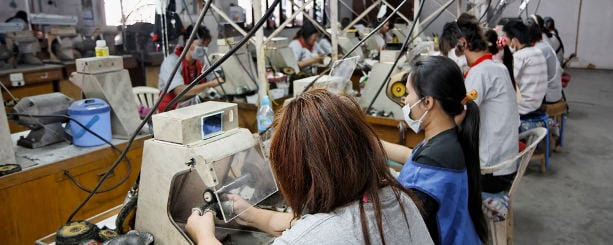
Jewellery Manufacturer in Dongguan

A. Incoming Materials & Parts Inspection

Purchasing parts and materials is the first step of the production process. As quality issues, when manufacturing jewelry, tend to stem from the production of the parts, rather than the later assembly stage, you shall consider hiring an inspector as soon as the parts arrive at the factory. Hence, quality issues can be avoided at an early stage, thereby reducing the risk of severe delays.

B. Pre-Shipment Inspection

The final, and most important, inspection shall be carried out when the products are fully assembled. Some defects, for example scratches, occur during assembly and packaging, thereby making the final, pre-shipment inspection, essential when importing jewelry from China. However, as always, clear instructions are the key to a successful outcome. Provide the quality inspection agency with all design drawings and component lists well in advance of the inspection date.

Product Regulations and Compliance Testing

1. Applicable Regulations

Jewelry is subject to various substance and ‘mechanical’ regulations in the United States, the European Union and other markets. Jewelry made for children younger than the age of 12 is also classified as a children’s product, and is therefore subject to additional regulations. The table below explains what jewelry imports in the US and EU must know:
MarketRegulationDescription
USCPSIA
The Consumer Product Safety Improvement Act (CPSIA) regulates all toys and other children’s products imported to, or made in, the United States. Visit this link to read more about importing Children’s Jewellery to the United States.
USCA Prop 65
California Proposition 65 restricts more than 800 substances in consumer products. Unlike CPSIA, which only applies to Children’s jewellery, California Proposition 65 also applies to jewelry sold to adult. Compliance is mandatory if you intend to sell in, or to buyers in, California and employ at least 10 workers. However, even if your total number of employees is less than 10, most (online and offline) retailers still require compliance with California Proposition 65.
EUREACH
REACH (Registration, Evaluation, Authorisation and restriction of Chemicals) restricts content of SVHCs in all consumer products sold in the European Union. Compliance is mandatory for all Jewellery imported to the EU.
EU
EN 14682:2007
EN 71 Part 1
EN 14682:2007 (Safety of children’s clothing. Cords and drawstrings on children’s clothing specifications) and EN 71 Part 1 restricts cord and chain length to prevent strangulation. Click here to read more.
AU/NZAS/NZS
ISO 8124.1:2002
AS/NZS ISO 8124.1:2002 regulates children’s products sold in Australia and New Zealand, including jewellery marketed to children aged 14 or younger. Click here to read more.
Buyers outside the mentioned markets, for example, in Asia, might still want to consider to ensure compliance with an EU or US standards. While many countries may not have regulations specifically for jewelry, general consumer safety regulations do apply in many Asian, South American and Eastern European markets.

2. Hallmarking and other Labelling Requirements

Platinum, Silver and gold jewelry are subject to Hallmarking requirements. Many countries have their own specific Hallmarking standards. Customs authorities are prone to checking imported precious jewelry, and improperly marked precious jewelry is likely to be seized.
Apart from Hallmarking, which doesn’t apply to non-precious jewelry (i.e., stainless steel and pearl jewelry), country of origin markings may apply.

3. Compliance Testing & Certification Requirements

Whether or not compliance testing is mandatory depends on the market and the applicable regulation / directive. Compliance testing and certification is normally mandatory when importing Children’s Jewellery. However, even when testing is not mandatory, compliance always is. Hence, the question of whether or not your company shall submit samples for testing is often a matter of risk management.
It’s also a matter of costs. Testing companies charge based on the number of samples. A necklace, for example, can consist of 5 to 10 different components and thereby result in very high testing costs.
The testing cost per SKU can range from $100 to $800, depending on the regulation and the number of different parts. Testing an entire Jewellery collection is therefore very costly. There are, however, a few strategies that can help you reduce the testing costs:
  1. Use the same Jewelry parts on as many SKUs as possible. Thereby, you reduce the number of lab tests needed to verify compliance.
  2. 2. Avoid Children’s Jewelry as the compliance testing requirements are very strict.
Your parts can either be tested according to a specific set of substances, for example, those restricted by California Proposition 65 or part of the REACH SVHC list, or specific substances (i.e., lead, nickel and cadmium). However, keep in mind that some regulations, for example CPSIA, require that each SKU is certified, rather than individual parts.

Recommended Jewelry & Accessory Trade Fairs in Mainland China and Hong Kong

Global Sources Fashion Fair

  • Location: Hong Kong
  • When: October 2015
  • Official Website: Click here

HKTDC Hong Kong International Jewellery Show

  • Location: Hong Kong
  • When: March 2016
  • Official Website: Click here

Canton Fair Phase 2

  • Location: Guangzhou
  • When: October 2015
  • Official Website: Click here
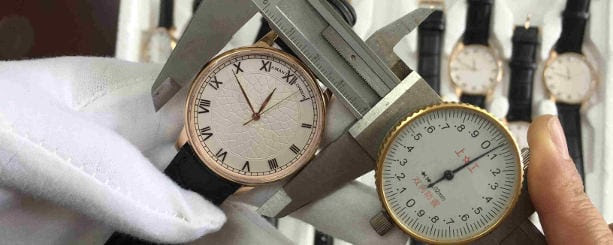

Sales Quotations: What’s Behind the Factory Price?

You are reading ChinaImportal's Newsletter!

IMPORTANT: If you don't see any images in this message, be sure to click the "Show Pictures" link in your email reader. Thanks!
Follow on LinkedIn Follow on Google Plus Follow on Facebook


Sales Quotation
The quoted price is often the final qualifying factor when selecting a manufacturer. However, there’s more to a price quotation that meets the eye. In this article, we explain what you must know before requesting a quotation from your supplier, and what you must look out for once they land in your inbox. We also answer common questions about prices set on Alibaba.com, how you know if you’re actually quoted a market price – and whether or not you should reveal your target price.

What’s in a Sales Quotation?

A unit price is based on four factors, as specified below:

a. Product Specifications

A products materials, components, functions and dimensions are, of course, defining the factory price of a product. While this is obvious, what you may not know is that most Chinese manufacturers operate as OEMs. Hence, while many suppliers can indeed provide long lists of ODM, or factory, products – they tend to lack internal quality guidelines. The buyer is expected to communicate all product specifications, even when buying ODM products.
As such, a quoted price is of no use, unless the supplier lists all specifications. Be on your guard, as they may deliberately leave gaps in the specification – in order to reduce the unit price. Whenever you do receive a price that is far lower than those quoted by competitors, the price is most likely based on an inferior product. You can only make a fair price comparison, if you do so, specification to specification.

b. Product Compliance

Manufacturing products in compliance with overseas, primarily US and EU, standards and regulations come at a cost. RoHS components are, for example, more costly than Non-RoHS components – and ensuring compliance with the EMC Directive or FCC Part 15 also adds up.
A ‘non-compliant product’ is therefore more expensive than a ‘compliant product’. And, Chinese manufacturers will not quote a price based on a compliant product, unless you communicate that this as a requirement.

c. Quantity

The larger the quantity, the lower the price. However, keep in mind that manufacturers, unlike wholesalers, operate on lower margins. They have little room for price reductions, and volume based price reductions tend to pan out once reaching four to five times the MOQ requirement.

d. Shipping Incoterm

The incoterm defines at which stage the cargo is transferred from the buyer to the supplier. The incoterm is always priced into the unit cost, and has therefore a major impact:
EXW: Buyer must arrange shipping from the factory floor, and export clearance. The manufacturer is only responsible for production and has no role in the shipping.
FOB: The supplier is responsible for shipping to the port of loading, for example Shanghai or Shenzhen, and export clearance. The buyer must arrange forwarding from the port of loading.
CIF: The supplier is responsible for shipping to the port of destination, for example San Francisco or Felixstowe. The buyer must arrange unloading and domestic forwarding.
DAP: The supplier is responsible for shipment all the way to a specific address, for example your warehouse or office.
Obviously, a quoted price based on EXW is far lower than a price based on CIF, or DAP, terms. Before you can say anything about a quoted price, you must consider the incoterm. Specify to your supplier that they must quote according to a set incoterm, in order to avoid distortion of the price data.

‘How do I know I’ve been quoted a market price?’

Assuming that you have specified all relevant technical specifications, compliance requirements, quantity and Incoterms – you will likely receive quite accurate unit prices. However, one data point is not enough to determine the market price. Instead, you must include at least 3 to 4 suppliers in your RFQ process.
Assuming you trade with regulated products (i.e., electronics, children’s products and food contact materials), you shall only include suppliers with a verified product compliance track record. You can read more about that here.
As already mentioned, be prepared to receive at least one or two quotations that are above or below the average. In most cases, a rock bottom price can be explained by one or more of the following reasons:
1. The product is not based on the same product specifications
2. The supplier did not price in your compliance requirements
3. The supplier quoted a price based on a larger quantity, than its competitors
4. The supplier quoted an EXW price
Never make a premature judgement based on a price. It’s very common that Startups and SME’s makes procurement decisions based largely on prices that aren’t real – while disqualifying good manufacturers. You simply get what you pay for.

Unit Prices at Alibaba.com

We often get questions from clients on whether they shall trust prices set by suppliers on Alibaba.com. The answer is almost always ‘no’. As explained in this article, a price is irrelevant if you don’t know what it’s based on. In addition, price ranges set by suppliers on Alibaba tend to be very wide – far wider than the actual pricing span, which is largely based on the order volume.
The problem isn’t Alibaba. It’s just that the suppliers don’t take it very seriously – as they are operating according to OEM principles. Material and component prices can change on a weekly basis. Updating prices for hundreds of ODM products is far too time consuming for the average manufacturer. That said, suppliers listed on Alibaba are, on average not better or worse than other suppliers.
Note: This is not referring to the online wholesale gateway implemented by Alibaba in 2014, which enables small volume orders directly on Alibaba.com.

‘Should we communicate our target price when ask for a quotation?’

Yes, feel free to communicate your target price, but only after careful consideration. A unit price must either be based on previous research date, for example a quotation of a related product or an outdated quote – or, based on your own margin calculations. Manufacturers have little room for price reduction, so don’t expect them to become generous simply because you give them an unrealistically low target price.
That’s not a clever tactic. You achieve nothing by setting an artificially low target price, other than disqualifying qualified suppliers. Again, you get what you pay for, and your business is always better off if you focus on increasing profit margins rather than shaving a few cents on the unit price.

Get Accurate Pricing & Product Data
From Verified Manufacturers in Asia


We help Startups & SMEs get access to accurate information on unit pricing, tooling costs and lead times, for both ODM (Private Label) and OEM (Custom Designed) products. We have solutions tailored for the following industries:
  • Apparel & Textiles
  • Watches & Accessories
  • Electronics
  • Home Products
  • Toys & Children
  • Materials, Parts & Tools

Wednesday, September 16, 2015

Product Compliance Strategies in Asia: Comparing 4 Different Industries

Source: ChinaImportal

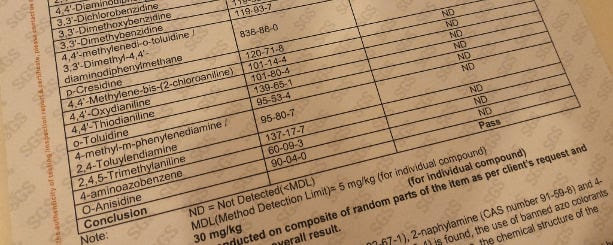
REACH test report
Most manufacturers in China, and other developing Asian countries, are unable to ensure compliance with overseas product safety standards and substance regulations. As such, a supplier’s ‘compliance track record’ (i.e., previously issued certificate and test reports, held by the supplier) is a key signal when selecting a manufacturing partner.
However, in many industries, very few suppliers can provide said documentation, therefore leaving foreign buyers with little information to judge a supplier’s technical capability and expertise. In other industries, the number of suppliers with extensive compliance track records is larger – but still requiring buyers to apply comprehensive testing strategies. In this article, we explain how you can assess manufacturer capabilities and manage compliance strategies in four different industries; Apparel & Textiles, Watches & Jewelry, Electronics and Toys & Children’s Products.

Apparel & Textiles

Importers generally only deal with the apparel manufacturer, on the surface of the supply chain. The apparel manufacturer in turn purchases fabrics and components (i.e., buttons and zippers) from subcontractors. Nothing unusual here. However, most apparel manufacturers are unable to produce any compliance documents whatsoever. Our conclusion is that most test reports are held by buyers, and fabrics suppliers. That said, don’t expect the apparel manufacturer to share information about either their subcontractors, or customers. As a result, the buyer is, as usual, left guessing. The truth is, that many (especially small) apparel manufacturers don’t know if their fabrics suppliers are able to provide compliant produce.
There are of course exceptions, but most apparel manufacturers are unwilling, or unable, to present more than a few test reports. Even in a ‘best case’ scenario, buyers shall not expect that the supplier is able to provide test reports matching the specific standard to which they must ensure compliance.
To us, any substance test report is of value. An apparel manufacturer’s ability to ensure compliance is entirely dependent on the material subcontractors they normally work with. A supplier that is able to ensure compliance with REACH (EU), is therefore quite likely to be able to ensure compliance with California Prop 65 (US). Hence, buyers must be flexible when making a selection. Still, Apparel and textile buyers must be ready to implement a ‘hands on’ compliance strategy, and never assume that manufacturers can provide test reports for their specific SKUs. Because that simply doesn’t exist.

What Apparel & Textiles Buyers Must Know

  • Relevant documents: Substance test reports, textiles performance test reports
  • What you can tell: The supplier is likely focused on western markets, and purchase fabrics and components from ‘compliant subcontractors’
  • Relevant testing standards / directives: REACH, California Proposition 65, OEKO Standard 100, AZO, Formaldehyde, Phthalates (Coated fabrics), Heavy Metals
  • Compliance Strategy A: Submit material samples for compliance testing (before and/or after production)
  • Compliance Strategy B: Select and verify a fabric supplier that provides materials to the apparel maker
  • Risk Level: Low / Medium (Fabrics made for the domestic market may not by default be non-compliant. Heavy Metals, Formaldehyde and other restricted substances are increasingly rare. Hence, a fabric must not be custom made to pass testing).

Watches, Jewelry & Accessories

Watch and Jewelry Manufacturers can, at best, produce a few substance test reports. Most cannot. The dynamics are largely identical to the Apparel and textile industries, and the same substance restrictions apply. Therefore, there is nothing else to add, but the summary below:

What Watch, Jewelry & Accessories Buyers Must Know

  • Relevant documents: Substance test reports
  • What you can tell: The supplier is likely focused on western markets, and purchase materials and components from ‘compliant subcontractors’
  • Relevant testing standards / directives: REACH, California Proposition 65, Heavy Metals, RoHS (Quartz Movements)
  • Compliance Strategy: Submit material samples for compliance testing (before and/or after production)
  • Risk Level: Medium (Metallic components in Watches and Jewelry may contain excessive levels of nickel and other restricted substances. Compliance is therefore not to be taken for granted, and certainly not when buying from suppliers focused on the domestic market).

Electronics

The situation in the Electronics industry is, on the other hand, very different. Buyers of electronics products are required to ensure compliance with a variety of safety standards and directives. The supply chain as a whole is also far more sophisticated. All large component suppliers make, albeit not exclusively, RoHS compliant parts – and the assembly manufacturers can normally present a rather extensive list of compliance documents. Hence, buyers in the industry have much more to act on, when selecting a supplier.
Still, buyers shall not expect manufacturers to offer catalogs filled with ‘compliant SKUs’, ready to hit the assembly lines. As always, a compliance track record indicates capability and expertise. This is further explained below:
a. A product certificate / test report is only valid for one or more (listed) SKU/s, not all ODM products in a supplier catalog. Most suppliers can only provide documentation for 5 to 20% of their product catalog.
b. Electronics are normally within the scope of two or more standard / directives. It’s very common that a supplier can present compliance documents for one such standard, while being unable to do so for others. For example, it’s very common to find products, compliant with the EU EMC (Electromagnetic Compatibility) Directive, while lacking compliance documents for RoHS and LVD (Low Voltage Directive).
c. If any components or subsystems are changed, previously issued documents are invalid.
Even when dealing with ‘high end’ manufacturers, buyers therefore find themselves in one of the following situations:
  1. The SKU is not compliant with any applicable product standards / directives
  2. The SKU is partly, but not fully, compliant with all applicable product standards / directives
  3. The SKU is fully compliant. However, design and component changes make previously issued compliance documents irrelevant.

What Electronics Buyers Must Know

  • Relevant documents: Product certificates, test reports and technical documentation
  • What you can tell: The supplier is likely focused on western markets, and purchase electrical components (i.e., ICs and subsystems) from ‘compliant subcontractors’. They also have ‘in house expertise’ to assemble products in compliance with overseas standards and regulations.
  • Relevant testing standards / directives: Low Voltage Directive, EMC Directive, R&TTE Directive, RoHS, FCC Part 15, UL Standards
  • Compliance Strategy A: Limit product selection to SKUs with a complete set of compliance documents
  • Compliance Strategy B: Submit final pre-production prototypes to a third party for compliance testing and certification.
  • Risk Level: Very High (An electronics product that is not designed and assembled specifically in compliance with applicable directives and standards is very unlikely to pass compliance testing. EU buyers must also ensure that their product is made using RoHS compliant components).

Toys & Children’s Products

Toys & Children’s Products are, for obvious reasons, strictly regulated in most major markets. American buyers, in all states, must ensure compliance with CPSIA, while EU buyers must ensure that their imported items are EN 71 compliant. These are framework regulations, which scope includes the following:
  1. Substances (i.e., restrictions on heavy metals and phthalates)
  2. Mechanical Properties (i.e., buttons, drawstrings and seams)
  3. Certification Procedures (i.e., CPSIA Children’s Product Certificate)
  4. Batch Testing Requirements and Exceptions
  5. Labelling Requirements
To ensure CPSIA compliance, American importers are generally required to issue a certificate using their domestic, US, company name – and provide test reports valid for the imported batch. Hence, ‘ready made CPSIA compliant’ products are non-existent, and buyers must look for other signals when selecting a manufacturer.

What Toys & Children’s Product Buyers Must Know

  • Relevant documents: Substance test reports, Physical property test reports
    What you can tell: The supplier is likely focused on Western markets, and purchase components from ‘compliant subcontractors’. They also have ‘in house expertise’ to ensure compliance with regulations and standards concerning physical properties of Toys and Children’s Products.
    Relevant testing standards / directives : ASTM F963, EN 71, REACH, California Proposition 65, Phthalates, Formaldehyde, Heavy Metals
    Compliance Strategy: Submit final pre-production prototypes to a third party for compliance testing and certification.
  • Risk Level: High (A product that is not made specifically in accordance to the requirements set by, for example, CPSIA or EN 71 cannot pass testing.)

Conclusion

Regardless of industry, American and European buyers are forced to work ‘hands on’ with compliance and certification procedures. Relying on the supplier to do the work for you is not realistic. There are no shortcuts, and it will take many years, if not decades, before Chinese, and other Asian, manufacturers are able to implement procedures ensuring a more seamless experience for overseas buyers.


No.636 Jln BPJ 3A/18 
Bandar Puteri Jaya
08000 Sg Petani Kedah
Tel: +60126694217
Email: alveolegame@gmail.com


Tuesday, September 8, 2015

Importing Watches from China – A Complete Guide

Source: ChinaImportal

Importing watches
In this guide we explain what you must know about importing watches from China. Keep reading, and learn how your Startup or Small Business can develop custom designed and private label wristwatches. Also learn about customization options, tooling costs, regulations and quality assurance.

Product Specifications

Watch Case

The biggest price factor is the watch case material. You have two options: Stainless steel or Zinc alloy. The latter is only used in low quality watches, retailing for less than $50. Watches sold for above that price are almost always made of Stainless Steel, if exclude other less common watch case materials, such as plastic and silicon.
As for the case design, you also have two options, as explained below:
  • ODM = An existing watch case design, based on a ‘ready made’ mold.
  • OEM = A custom designed watch case, requiring the supplier to open a new mold.
Most Watch manufacturers can provide an extensive list of existing ODM products, which can also be modified (i.e., custom logo, back case engraving, custom designed hands and crown). However, if you intend to have an entirely new case design made, you need to provide one, or more, of the following:
  • CAD file
  • 2D design file (ISO or ANSI standard)
  • Physical prototype (i.e., 3D printed replica)

Movement

The movement is the essential component in a watch. Most Chinese manufacturers offer both low cost Chinese made movements, and the more common, Citizen Miyota movements. Some Watch brands prefer other movements, for example Ronda movements. However, it tends to be quite hard to find suppliers that can provide such high end movements, thereby forcing the buyer to arranging the movement purchase from the maker itself. That being said, most movement makers have representative offices in Hong Kong or in Mainland China.
Buyers based in the European Union must also ensure compliance withRoHS (Restriction of Hazardous Substances Directive), which restricts heavy metals in electrical components. Quartz movements are electrical components, hence covered by the RoHS scope. Most brand name movements, including Citizen Miyota movements, which are RoHS compliant, thereby making it easier to ensure compliance. I am, however, not aware of the same applies to low cost movements, from smaller manufacturers.

Design Customization Options

When importing watches from China, OEM refers to custom designed watch cases. ODM, on the other hand, refers to factory standard watch cases (i.e., cases for which a mold is already made). In addition the watch case, there are various design elements and components, that can be customized:
Clock face
  • Plating
  • Logo
  • Indexing
  • Print
  • Hands
Glass
  • Sapphire
  • Mineral
Other
  • Back plate engraving
  • Crown
  • Wristband
  • IPX Standard (i.e., 10 ATM)
However, customized components require additional tooling (i.e., injection molds), which are without exception paid for by the buyer.

Straps

Most watch suppliers don’t manufacture straps ‘in house’, but purchase wristbands from specialized subcontractors. The Minimum Order Quantity (MOQ) requirement (50 to 200 pcs) for straps tend to be lower than the Watch MOQ, when buying factory standard straps. However, custom designed (OEM) straps results in a higher MOQ, often set at 500 to 1000 pcs. If you intend to purchase OEM wristbands, you need to prepare the following to the supplier:
  • Bill of Materials (Component list, material specifications)
  • Design drawings
  • Dimensions and size table

Product Packaging

Product packaging is also subcontracted to specialized packaging suppliers. Not manufactured by the Watch supplier. ODM packaging, i.e., a standard gift box with the buyer logo, tends to be offered with a lower MOQ (500 – 1000 pcs per design) while OEM packaging requires the buyer to purchase 2000 to 3000 pcs per design. The Watch manufacturer can mostly offer a number of standard ODM designs for the buyer to select, thereby reducing the need for OEM packaging.

Tooling Costs & Prices

Quartz Movement
The tooling cost is based on the number of custom designed components. Every custom designed component, be it the watch case or the hands, require new tooling, which is, with very few exceptions, paid for by the importer. Below follows a few reference prices:
  • Watch Case Mold: $200 – $300
  • Crown Mold: $120 – $200
  • Custom Hands: $80 – $150
  • Custom Clock Face: $40 – $100
  • Custom Back Plate Engraving: $20 – $40
The tooling cost for OEM watches is, in relative terms, very low. However, the tooling production time must also be factored into the cost calculation. The waiting time for new tooling can be up to 45 days, and that’s only for the first batch. When considering the, very likely, revisions, the total prototype development time can easily run up to 2 to 3 months.
However, customization has a small impact on the unit cost, which largely depend on the materials and components, rather than specific design elements:
  • Stainless Steel Case w. Ronda Movement: $19 – $24
  • Stainless Steel Case w. Miyota Movement: $16 – $22
  • Stainless Steel Case w. Noname Movement: $14 – $20
  • Zinc Alloy Case w. Miyota Movement: $6 – $8
  • Zinc Alloy Case w. Noname Movement: $4 – $5
There’s no right or wrong when selecting materials and components. However, most Watch manufacturers consider it unwise, and rightly so, to combine a Stainless steel case with a low cost movement – or even vice versa. Zinc alloy watches rarely retail for more than $50, while a Stainless Steel watch, costing just a few dollars more, can retail for $200 to $300. Hence, a small investment in quality can vastly improve your profit margins. That being said, in the end, it’s all about the price segment your company wants to target.

Prototype Development

The role of the watch supplier is to purchase and assemble components, not to assist with design. It’s your job to ask ‘the right questions’, concerning the suppliers’ production capabilities and customization options, and to provide the information required by the supplier to produce an OEM or ODM sample:
ODMOEM
Watch Case
1. ODM SKU
2. Photocopies
One (or more) of the following:1. CAD file
2. 2D Design Draft (ANSI or ISO)
3. 3D Printed Design / Reference Sample
Clock Face
1. Indexing
2. Plating
3. Logo file (.ai)
1. Indexing
2. Plating
3. Logo file (.ai)
Back PlateEngraving Logo File (.ai)Engraving Logo File (.ai)
Strap1. ODM SKU
2. Photocopy
1. Bill of Materials
2. Design Draft (ANSI or ISO)
Crownn/a
(standard crown on selected SKU)
CAD file
HandsSelect from catalogeDesign file (.ai)
As in every industry, it’s critical that you provide the supplier with clear, and consistent, product specifications and files. Don’t assume that the supplier will spot errors, fill unspecified gaps or report conflicting information. Vague information on the product specification can result in misunderstandings, and thereby cause severe quality issues later in the process.
Lead times are, as mentioned, another critical factor to consider whether to custom design the watch case and other components. Below follows a basic lead time comparison:
(Days)ODMOEM
Tooling030 – 45*
Sample10 – 1510 – 15
Production25 – 4525 – 45
Total35 – 6065 – 105*
*Excluding additional mold revisions.
Notice that the listed lead times don’t take price researchadditional sample revisions, contract negotiation, lab testing, quality control and shipping into consideration.

Applicable Standards and Regulations

Buyers based in the United States and the European Union must ensure compliance with various product safety standards and directives. Below follows an overview:
MarketRegulationDescription
USCA Prop 65Regulates more than 800 substances in consumer goods. Compliance is when selling in, or to consumers in, California.
USCPSIACPSIA compliance is mandatory for Children’s products sold in the United States. Hence, CPSIA applies to children’s watches.
EURoHSRoHS restricts heavy metals in electronic components, and metallic parts in contact with said components. Hence, RoHS compliance is mandatory for both the watch case and the movement.
EUREACH
REACH regulates substances in consumer goods. Compliance is mandatory in all EU states.
EUEMC DirectiveThe EMC (Electromagnetic Compatibility) Directive is applicable to all electronics products.
EUEN 71EN 71 is mandatory for toys and certain children’s products sold in the EU.
Compliance testing can be carried out in China, by a third party company, such as SGS, Asiainspection or Bureau Veritas. However, I advise you to hire a quality inspector to collect batch samples, rather than letting the supplier do it for you. There’s always a risk that they send a ‘compliant sample’, in order to pass the test.

Quality Control

Watch Supplier Office
A Quality Inspector can offer much more than just batch sample collection. The only way to avoid high defect rates is by inspecting the cargo on site, prior to balance payment and shipment. Below follows a standard Quality Inspection Protocol, for watches:
PartChecklist
I. Visual inspection
1. Scratches
2. Damages
3. Plating
4. Logo
5. Engraving
6. Glass
7. Strap
8. Movement
II. Dimensions1. Case Diameter
2. Case Thickness
3. Strap Width
4. Strap Leangth
III. Functional1. Movement
2. Battery
IV. Packaging1. Logo print
2. Dimensions
3. Material Weight
4. Damages / Dirt
5. Export Packing
V. Physical Properties1. Water Resistance
2. Glass Strength

Watch & Clock Trade Shows in Mainland China and Hong Kong

Hong Kong Watch & Clock Fair

  • Location: Hong Kong
  • When: 8 – 12 September 2015
  • Website: Click here

Canton Fair (Phase 2)

  • Location: Guangzhou
  • When: 23 – 27 October 2015
  • Website: Click here

China Watch & Clock Fair

  • Location: Shenzhen
  • When: TBA (2016)
  • Website: Click here

Tuesday, August 25, 2015

Sportswear Manufacturers in China: A Complete Guide (Source: ChinaImportal)

IMPORTANT: If you don't see any images in this message, be sure to click the "Show Pictures" link in your email reader. Thanks!
Follow on LinkedIn Follow on Google Plus Follow on Facebook

Sportswear Manufacturers in China: A Complete Guide

Sportswear Manufacturers in Asia
In this product guide we cover Sportswear Manufacturers in China, and look into the specifics of importing private label and custom designed fitness apparel. Keep reading, and learn more about production clusters, material specifications and product customization. In addition, we also explain what you must know about relevant textiles regulations, including substance restrictions, technical standards and labelling requirements.

Sportswear Manufacturing Clusters

Sportswear Manufacturers, a title that can be applied to Apparel producers of a wide variety of products, are (with notable exceptions) concentrated in Fujian and Guangdong. Instead, they are part of the larger apparel industry. Sportswear buyers shall consider visiting the following cities:
  • Shenzhen, Guangdong
  • Guangzhou, Guangdong
  • Fuzhou, Fujian
  • Xiamen, Fujian
  • Jinjiang, Fujian
  • Quanzhou, Fujian
As with all suppliers, Sportswear manufacturers are specialized. Textiles manufacturers can in general be said primarily be specialized on certain product categories, materials and target markets. Below follows a list of common product areas in the industry:
  • Compression Wear (Fitness, Cycling & Yoga)
  • Hiking & Outdoor
  • Jackets
  • Skiing & Snowboarding Wear
  • Gold & Tennis Polo’s
  • Swimwear

Fabric and Material Specification

Sportswear buyer can generally rely on materials and components supplied by the Apparel manufacturers’ subcontractors. However, the quality of the materials on offer, differs, as Apparel manufacturers does not only specialize in areas – but also price segments. While a supplier may be ‘reliable’, that is not saying they are focused on high end Sportswear. Quality can only be defined in technical terms. As such, a first step of the process is to draft a material specification. When buying Sports and Fitness Apparel, this must be included:
  • Fabric (e.g., 61% cotton, 33%polyester, 6% spandex)
  • Fabric Weight (e.g., 180 gsm)
  • Stretch (i.e. 4-Way Stretch)
  • Other materials (e.g., Lining and Mesh)
  • Printing
  • Other fabric specifications (e.g., Quick Dry, antibacterial, UV Protected)
Importers are wise to begin with a somewhat flexible material specification, as the manufacturer must be able to match corresponding fabrics. OEM fabrics can be purchased, but should be avoided unless you have highly specific material requirements.

Product Design, Customization and Tech Packs

A material specification is complemented by a design drawing, both of which must be included in the buyer’s Tech pack. Today, however, many apparel companies buy private label (ODM) products, rather than custom designed (OEM) clothing. As the applied procurement and product development procedure is very different between the two, we compare the key points in the table below:
ODM SportswearOEM Sportswear
Reference SampleProvided by the supplierProvided by the buyer
Sample PhotosProvided by the supplierProvided by the buyer
Material Specifications
1. ‘Guideline specifications’ provided by the buyer.
2. The supplier provides counter samples of the fabrics that corresponds (to a varying degree) to the buyers ‘Guideline specs’
1. ‘Guideline specifications’ provided by the buyer.
2. The supplier provides counter samples of the fabrics that corresponds (to a varying degree) to the buyers ‘Guideline specs’
Alternative B: The supplier purchase OEM fabrics made entirely according to the buyers specifications
Design DrawingsProvided by the supplierProvided by the buyer
MeasurementsSize table provided by the supplierSize table provided by the buyer
ColorsSelected from suppliers color card or standard fabric colorsOption A: Selected from suppliers color card or standard fabric colorOption B: Selected from Pantone color card
Logos & Embroideries.ai or .eps files provided by the buyer.ai or .eps files provided by the buyer
Labels.ai or .eps files provided by the buyer.ai or .eps files provided by the buyer

Apparel Regulations and Standards

Sports and fitness wear are, in some countries and markets, subject substance regulations. As far as I am aware, such regulations apply to most consumer products, including textiles, and don’t apply specifically to Sportswear. Buyers in the United States and the European Union must be aware of the following:
MarketRegulationDescription
EUREACHREACH (Registration, Evaluation, Authorisation and restriction of Chemicals) restricts usage of chemicals and heavy metals in all products, including Sportswear and other textile goods. Third party compliance testingis not required by law, but non-compliance results in fines and a forced recall.
USCA Prop 65California Proposition 65 restricts more than 800 substances in consumer products, including Sportswear and other apparel. Compliance is required for all companies with more than 10 employees, selling in, or to buyers in, California.
USFHSA
FHSA (Federal Hazardous Substances Act) restricts various substances, some of which are found in textile – for example Formaldehyde.
Ensuring compliance requires Sportswear importers to apply a comprehensive testing strategy. Normally, the first step of this process is to limit the supplier selection to those able to produce verifiable test reports. However, as many experienced Apparel buyers already know, many manufacturers lack an extensive compliance track record, making it hard to tell whether a supplier is truly able to control its incoming materials.
In fact, many suppliers themselves are unsure if their products are compliant with overseas standards. As far as I am aware, the most efficient way to verify compliance, when buying apparel, is to first confirm materials and colors, which are submitted for compliance testing very early in the process. If possible, in parallel with sample development.
Buyers of Sportswear shall also consider a range of other, non-mandatory, performance testing procedures, including the following:
  • Flammability
  • Thermal
  • Water
  • Fiber Analysis
  • Fabric Abrasion and Pilling Resistance
  • Feather and Down Testing
  • Fabric Tearing Strength
  • Colorfastness (i.e., UV Light, Rubbing)
  • Antibacterial and Odor
  • Quick Dry
Fabric samples can be tested in Mainland China or Hong Kong, where several accredited European and American testing companies are present. However, Sportswear manufacturers require the buyer to pay all third party fees, including for substance and fabric performance testing. For reference, a variety of EU and US technical standards for textiles can be found here:
Most other markets base their standards to largely, sometimes entirely, on American or European Union standards.

Labelling Requirements

Importers are required to ensure compliance with all local labelling requirements. The scope of regulations varies by country and market, but tends to include the following:
  • Material specification (i.e. 80% Nylon / 20% Spandex)
  • Washing Symbols (i.e. ASTM and/or Washing Instructions
  • Size
  • Country of Origin (i.e. Made in China)
Never assume that your supplier is aware of how clothing must be labelled in your market. Asian contract manufacturers, including Chinese, are accustomed to making goods entirely according to the buyer’s specifications, including for labelling. Yes, that’s the case even when buying ODM products. To avoid compliance issues, provide your suppliers with ‘ready made’ .ai or .eps label files, and its placement specified in the design drawings of the Teckpack.

Sportswear Trade Fairs in China

Global Sources Fashion Fair

  • Location: Hong Kong
  • Time: October 27 – 30
  • Website: Click here

Hong Kong Fashion Week (HKTDC)

  • Location: Hong Kong
  • Time: July 4 – 7
  • Website: Click here

Canton Fair (Phase 3)

  • Location: Guangzhou
  • Time: October 31 – November 4
  • Website: Click here

China International Sporting Goods Show

  • Location: Fuzhou
  • Time: May 8 – 11
  • Website: Click here

Taipei Int’l Sports Textile & Accessory Expo (SpoMODE)

  • Location: Taipei
  • Time: March 2 – 5
  • Website: Click here

ISPO Shanghai

  • Location: Shanghai
  • Time: July 7 – 9
  • Website: Click here

ISPO Beijing


  • Location: Beijing
  • Time: February 24 – 27
  • Website: Click here