Monday, October 19, 2015

Spec Sheets: Defining Quality As an Industry Outsider

Source: ChinaImportal's Newsletter!


Spec Sheet
China has evolved into an increasingly sophisticated production hub. While MNCs in certain industries might consider other manufacturing bases, China (and Guangdong province in particular) has never been more attractive to e-commerce companies and hardware Startups. On the other end of the supply chain, Amazon.com and Shopify are making it easier and faster than ever to gain market access.

‘Who is an Industry outsider?’

In this ‘gold rush’, the doors are essentially open to anyone, including the industry outsider – a company or individuals without any previous experience in the industry. Think bankers going sportswear designers. The industry outsider is largely unaware of how ‘quality’ is defined for their product. Meanwhile, they tend to assume that the supplier is responsible for ensuring a certain, perhaps imaginary and undefined, quality standard.
This could not be more wrong. Knowing what defines the quality of your product is the key to prevent quality issues in the first place. In my experience, a lack of clear specifications is, by far, the most common reason for severe quality issues. As compared to, say, deliberate usage of substandard components and intentional quality fade.
To help you prevent this from happening, we explain how you can identify allrelevant technical specifications for your product, using spec sheets on Alibaba.com and Amazon. We also explain how you, in turn, can use the spec sheet to identify various quality and product customization options. But first, let’s recap on why a spec sheet is where every product begins and ends.

Why is it important to identify product specifications and quality options?

In contract manufacturing, it’s not the supplier’s responsibility to define and ensure quality. To anyone with an engineering or industry background, this is fairly obvious. However, industry outsiders often lack technical understanding of the product they intend to develop, and must therefore learn how product quality is defined, from scratch. Quality is, in turn, defined by the specification sheet.
Hence, the first step is to identify all relevant specifications, and then let the manufacturer respond to each one. Don’t assume that the supplier communicates all relevant specifications. They might have their own reasons for not communicating certain aspects, or simply be unaware. By letting the supplier ‘fill in the gaps’, you expose your business to the risk of severe quality issues due to misunderstandings, or due to usage of low quality components.

1. Research specification sheets on GlobalSources and Alibaba

alibaba spec sheet
Suppliers on Alibaba.com and GlobalSources.com tend to publish very extensive specification sheets. However, the detail varies, and some suppliers leave certain specs out. Review specification sheets from as many suppliers as possible, preferably fifteen to twenty, to draft a full list. Supplier spec sheets can also reveal various quality options (i.e., materials or components), and give a hint about applicable product standards and regulations (i.e., RoHS).

2. Research specification sheets on Amazon.com, Ebay and Online stores

Amazon
As a complement to Alibaba.com, detailed specification sheets can often be found on Amazon.com, Ebay and smaller Online stores. For natural reasons, spec sheets on Amazon.com and other B2C sites are not as detailed as those presented on B2B directories. However, they may still reveal certain technical details and regulatory requirements.

3. Request spec sheets and quotations from selected manufacturers

Once you have drafted a list reference specification sheet, you must research the various options (one or more) available for each specification. Request the suppliers to quote what they consider as ‘low, medium and high quality’ – which in turn is reflected by the quoted price. Provide a full list of specifications to which the supplier must respond. Below follows a simple (and far from complete) spec sheet for an E27 LED bulb light:
SpecificationsSKU A: Low QualitySKU B: Medium QualitySKU C: High Quality
Base TypeE27E27E27
Light SourceSMD 2835SMD 2835SMD 2835
Power5W7W9W
Lifetime30000 h40000 h50000 h
Lumens600 lm600 lm800 lm
RoHSNoYesYes
EMCNoYesYes
LVDNoNoYes
Price$2.7$3.25$3.85
Request quotations from at least five to six different suppliers. Also remember to communicate your compliance requirements, as this has a major impact on the unit price.

Get Accurate Pricing & Product Data
From Verified Manufacturers in Asia


We help Startups & SMEs to get access to accurate information on unit pricing, tooling costs and lead times, for both ODM (Private Label) and OEM (Custom Designed) products. We have solutions tailored for the following industries:
 
Apparel & Textiles, Watches & Accessories, Electronics,
Home Products, Toys & Children, Materials, Parts & Tools

3D Printer & Filament Manufacturers in China: A Complete Guide

You are reading ChinaImportal's Newsletter!


3D printer manufacturers
In recent years, 3D printers have become an affordable commodity, costing as little as US$500. This is largely due to the rapid expansion of China’s 3D printer manufacturers. In this article, we share the findings from our own industry research, including manufacturing clusters, compliance related issues and technical specifications.

Primary 3D Printer Manufacturing Clusters in Mainland China

The rapid development of the 3D printer industry is relatively recent. As with most electronics, Shenzhen in Guangdong province is home to the greater part China’s 3D printer manufacturers. There are, however, smaller cluster in other cities and provinces, one of them is Jinhua in Zhejiang, located a three hour drive from Shanghai.
Many minor traders, lacking technical expertise to communicate buyer requirements and ensure quality, have picked up the 3D printer as some sort of gimmick product. As such, many suppliers on online B2B directories are mere middlemen, offering nothing but increased costs and risks. Instead, I advise 3D printer buyers to identify and assess manufacturers on the following factors:
a. Registered Capital: This is a research and capital intensive industry. RMB 10,000,000 (approximately US$1,580,000) and above is to be expected from a medium scale 3D printer manufacturer.
b. Compliance Track Record: 3D printers are, as other machines, subject to various product standards and regulations. Ensure that the supplier has previous experience manufacturing 3D printers according to the standards and regulations in your country.
c. Quality Management System (QMS): A QMS, for example, ISO 9001:2008, is implemented to track and prevent defective components and units. Click here to read more about Quality Management Systems.

3D Printer Product Specifications

Regardless of whether you buy ODM printers off shelf, or develop an OEM model, you need to keep track of defining product specifications. Below follows two sample specifications:
SKU3D Printer A3D Printer B
Print TechnologyFDM (Fused Deposition Modeling)FDM (Fused Deposition Modeling)
Technical Specifications
– Unit Dimensions450 x 390 x675 mm380 x 360 x 440 mm
– 3D printer Build Envelope300 x 200 x400 mm245 x 205 x 200 mm
– Layer Thickness0.05 – 0.3 mm 0.06 – 0.4 mm
 – Print Accuracy (mm)
X-axis: +/- 0.01
Y-axis: +/- 0.01
Z-axis: +/- 0.002
X-axis: +/- 0.01
Y-axis: +/- 0.01
Z-axis: +/- 0.002
– Nozzle Workig Temperature260 C230 C
– Nozzle Diameter0.4 mm0.5 mm
– Nozzle Moving Speed20 – 150 mm / s (Adjustable)20 – 110 mm / s (Adjustable)
– Heating Time
Nozzle: < 2 min
Platform: < 10 min
Nozzle: < 2 min
Platform: < 10 min
– Voltage
VAC 50/60 Hz
95V – 265V
VAC 50/60 Hz
95V – 265V
– Power350 W350 W
Material
– Type3 mm PLA / PETG / ABS3 mm PLA / PETG / ABS
– Single ColorYesyes
Connectivity
USB: Yes
SD Card: Yes
USB: No
SD Card: Yes
Support SoftwareSoldWorks, PRO-E, Auto CAD, 3dx Max, UG, Rhino, MayaSoldWorks, PRO-E, Auto CAD, 3dx Max, UG, Rhino, Maya
Support OSiOS, Windows 8, Windows 7, Windows XP, LinuxiOS, Windows 8, Windows 7, Windows XP, Linux
Make sure to list all specifications before making a quotation request. Don’t rely on the supplier to list all specifications.

Pricing & Minimum Order Quantity (MOQ)

While the MOQ is often as low as 5 to 10 pcs, 3D printer manufacturers can often offer major discounts when buying larger volumes. Below follows a few, authentic, price examples for a basic desktop printer:
Price ($, FOB)SKU 1SKU 2SKU 3SKU 4
1 pc (Sample)1250999800900
10 pcs1050899750680
100 pcs950799650580
As mentioned, the MOQ is often set at 5 to 10 pcs, essentially all suppliers are willing to sell individual 3D printer units – with or without buyer branding, as a product sample.

Applicable Product Standards & Regulations

3D Printers are subject to regulations applicable to electronic equipment, and machinery. Below follows an overview of applicable regulations in the United States and the European Union:
  • United States: FCC Part 15, UL
  • European Union: Machinery Directive (MD), Low Voltage Directive (LVD), Electromagnetic Compatibility Directive (EMC), RoHS, WEEE
Ensuring compliance is mandatory. Importing and selling non-compliant 3D printers is illegal and may result in a forced recall and major fines – or even a lawsuit, if a user is injured or property damaged. Our finding, when verifying 3D printer manufacturers in Greater China (Mainland China and Taiwan) is that the top manufacturers indeed has relatively strong compliance track records (i.e., a paper trail of previously issued certificates and third party test reports). Yet, very few suppliers can provide more than one or two 3D printer models with full US and/or EU compliance.
As explained in this article, a product may be partially compliant, in other words compliant with one directive, but not all applicable directives and standards. In the EU, buyers must ensure compliance with a range of different directives, and ensure that the product is CE marked. It’s quite common to find a product that is, for example, tested and certified for EMC Directive compliance – yet without documentation proving RoHS compliance and LVD compliance, the latter which is required for the AC adapter.
For an industry outsider, it’s a rather complicated situation. Still, far from unusual among electronics manufacturers in China and other Asian countries. Complementary compliance testing and certification is to be expected when buying 3D printers from China.
Our finding is also that compliance with EU regulations (i.e., EMC and LVD) is more common than US regulations and standards, for example FCC Part 15 and UL standards. However, compliance with EU standards is a strong indication of supplier capability to ensure compliance with other overseas standards, including those in the US.
Buyers from smaller markets, such as Australia, New Zealand and Canada, shall not expect suppliers to hold compliance documents valid in their markets. Instead, supplier and product selection must be based on compliance with other overseas standards. Again, that is in most cases, European Union directives.

3D Printer Filaments

Most 3D printer manufacturers purchase filaments from specialized subcontractors. Different 3D printers are made for certain types of filaments, for example the following:
  • PLA
  • PETG
  • ABS
  • Nylon
  • PET
  • TPE
  • TPU
While mass production using 3D printers is still rare, a 3D printed product is still subject to substance regulations:
  • United States: California Proposition 65, CPSIA (Children’s Products)
  • European Union: REACH, EN 71 (Toys)
This leads to the question as to whether 3D printer filament should be compliance tested as well. However, most substance regulations don’t apply to prototypes used for demonstration. This is likely an area of interest for the future. However, filaments must not be purchased from the 3D printer manufacturer in China, but from domestic suppliers, thereby reducing the risk of compliance issues.

Get Accurate Pricing & Product Data
From Verified Manufacturers in Asia


We help Startups & SMEs to get access to accurate information on unit pricing, tooling costs and lead times, for both ODM (Private Label) and OEM (Custom Designed) products. We have solutions tailored for the following industries:
 
Apparel & Textiles, Watches & Accessories, Electronics,
Home Products, Toys & Children, Materials, Parts & Tools

Thursday, October 15, 2015

The success story of Air Asia


Tony Fernandes's top 10 tips for entrepreneurs

1) You don’t need to know everything

I came from the music business. I knew nothing about planes. To all the entrepreneurs out there, you don’t need to know everything about what you want to do. It’s all about the idea, it’s about passion, it’s about implementing it.

2) Just do it!

Don’t let anyone tell you that you can’t do it. You’ve got one life, so you can’t press the rewind button and say ‘I wished I had done that.’
So I recommend to all of you out there, just do it. Live your life to the utmost, be positive. If you fail, at least you have tried.

I have failed miserably at Formula One, but I have no regrets because I got to stand with the greats from Ferrari, McLaren, and others.

3) Passion is a key problem-solver

Dreams do come true. Don’t worry about failure. You have one life, make the most out of it. Nine times out of 10, if you have the passion, you will find a way to work through it.

4) Invest in marketing

If you have the greatest idea in the world, please, please, please put some money on marketing. This is because if you don’t put money on marketing, nobody is going to hear about your great idea.
There are so many great ideas that never took off because of a lack of marketing.

Marketing is not about the dollars, it is also about public relations (PR). In AirAsia, we had no money. So I ran around with a red cap on and said controversial things so that the press would always take a picture of me. That was our marketing in AirAsia’s early days.

We have been through so many issues, and marketing played a key role in overcoming them.
Remember SARS (severe acute respiratory syndrome)? At that time, nobody wanted to fly; we all thought we are going to die.

Everyone cut their advertising, but I told my guys not to cut because this was the best time to build our brand. In fact, we tripled our advertising and everyone looked at me and said, “Are you on drugs?” I said, no, it is the best time because no one else is advertising.

When the first Bali bomb attack happened, everyone cancelled their flights. I said to the guys, we cannot let the Bali route die. We must continue to fly.

So we came up with ‘Love Bali’ campaign, giving away 10,000 free seats, and it worked. All 10,000 seats were snapped up in like under one minute. And all those who got those seats told all their friends about it on social media. Your best advertisement is your customers.

5) Leverage social media

When Malaysians get a good deal, they will tell the whole world about it. So the 10,000 people who went and had a good time in Bali, told 10,000 people that they had a good time. That was the early gestation of AirAsia’s social media.
We realised the power of social media very early on, so when Facebook and Twitter came up, we latched onto them. We were early adopters. We now have 32 million people on our various social media platforms, and 7 per cent of our business comes directly from social media.
The Bali campaign taught us that our best advertisements are our customers.

6) Don’t be scared of complaints

Complaints are actually free market research. Someone took the effort to write to you to tell you where things went wrong and how they should be improved. These are things that companies pay a lot of money for consultants to tell them that same thing.

So we treat every email preciously.

7) Focus on one image when it comes to branding

During the early days, there was the word ‘AirAsia’ and a logo of a bird in our branding.
If you look at the top brands in the world, there’s only one image that comes to your mind. When I say “Shell,” you think of the Shell logo. When I say “Coca-Cola,” you think of the word ‘Coke’ in italics, and when I say “Nike,” you think of the swoosh.

So, back to our earlier AirAsia brand, we said drop the bird – we felt it was facing the wrong way anyway – and we used ‘AirAsia’ as our logo. Just one image. Why spend double the money to promote two images?

We also dropped the blue and the green colours. I tried very hard not to go with red, because everyone thinks that I want to be Richard Branson [the Virgin Group founder and Fernandes’ former boss] ... but it was the best colour, so we picked red.

So yes, the colour does make a big difference!

8) Go on the ground

What I used to do – although I don’t do this anymore – was that once a month, I would carry bags, I would be a cabin crew [member], and also at the check-in counter.

I did this for two reasons. The first is that you can’t be an effective CEO (chief executive officer) unless you go on the ground to experience the real situation.

Here’s a true story. The baggage handling team told me that they needed belt loaders. I told them, “No, we can’t buy that as it’s too expensive.”

So one day when I was tasked to carry bags, they put me on one of the Indonesia flights. People who fly with us generally bring their house with them, but people who fly to Indonesia bring their neighbour’s house as well!

So there was a lot of bags. I broke my back in the process, and I told my team that they were right and I was wrong, and let’s buy the belt loaders.

If I didn’t do that [go on the ground] and just sat comfortably in the office, I would have made a wrong decision, damaged a lot of bags, and probably started a union.

The second reason [for going on the ground] is that I wanted to look for talent. I wasn’t looking for the talents from Oxford or Cambridge, I was looking for the Grade 3 SPM [O Levels equivalent] kind of guys who needed a second chance.

9) Never underestimate the potential of your staff

I broke all the rules in terms of hiring people. To me, as long as you have a dream, you can do anything.
There was an ex-cabin crew member – she came up to me one day and told me that her dream was to become a pilot. I told her to go for it.

Then she called me up one day and asked if she could take part in the Miss Thailand [beauty pageant], and I told her okay, as long as I get to use her photographs in our marketing materials.

She won the [Miss Universe Thailand] pageant and recently became a captain – so we are the only airline in the world with a Miss Thailand flying with us.

The moral of the story is that we have such a flat structure that she was able to tell me what her dreams were, and we were able to make a raw diamond into a diamond.

Another one of my boys, a baggage handler in Kuching, told me he wanted to become a pilot. I told him to go for it. He passed all the exams ... he had the top marks in the flying academy. Today, he is a captain.

We have many of such stories at AirAsia.

Your biggest assets, besides your ideas, are your people – because at the end of the day, it is the people who will deliver your ideas.

10) Data is king

We have a huge amount of data that we don’t know what to do with it, but everyone else wants our data ... so we figured it must be something very valuable and there must be an opportunity there.

We are investing in a few ventures. We plan to launch our own version of TripAdvisor, a travel dongle, a new YouTube-type of channel and more – data will be playing an essential role in these ventures. Data will be king. —

Monday, October 5, 2015

Pohon Cherry Grill


Underwear & Lingerie Manufacturers in China: A Complete Guide

You are reading ChinaImportal's Newsletter!

IMPORTANT: If you don't see any images in this message, be sure to click the "Show Pictures" link in your email reader. Thanks!
Follow on LinkedIn Follow on Google Plus Follow on Facebook


underwear manufacturer
In this product guide, we explain everything you must know about Underwear & Lingerie Manufacturers in China, including industrial clusters, supplier qualification and design customization options. We also explain what you must know about potential quality issues and applicable labelling requirements – and substance restrictions in the United States and the European Union.

Underwear and Lingerie Manufacturing Clusters in China

China’s export oriented underwear manufacturers are largely concentrated in the country’s primary textiles production centers; Guangdong Province, Fujian Province and Zhejiang Province. If you intend to visit manufacturers in Mainland China, you are likely to find yourself in one of the following cities:
  • Quanzhou, Fujian
  • Jinjiang, Fujian
  • Shantou, Guangdong
  • Guangzhou, Guangdong
  • Dongguan, Guangdong
  • Zhongshan, Guangdong
  • Yiwu, Zhejiang

Qualifying Manufacturers

Underwear and lingerie is, in relative terms not a very capital intensive industry. Manufacturers in such ‘low value added’ industries then to be rather unsophisticated, thereby requiring a rigid Quality Assurance (QA) process, managed by the buyer.
The first step of the QA process is, as explained below, to draft a comprehensive product specification. There are, however, certain useful signals for qualifying Underwear and Lingerie Manufacturers:
  • Business Scope (As specified on the manufacturers business license)
  • Registered Capital (As specified on the manufacturers business license)
  • Substance Test Reports (i.e., REACH and Oeko Tex Standard 100)
  • Quality Management System / Production Lines Audit Reports (i.e., ISO 9001:2008)
  • Social Compliance Certification / Audit Reports (i.e., Sedex and BSCI)
  • Environmental Audit Reports (i.e., ISO 14000 series)

What to Include in The Techpack

a. Design Drawing
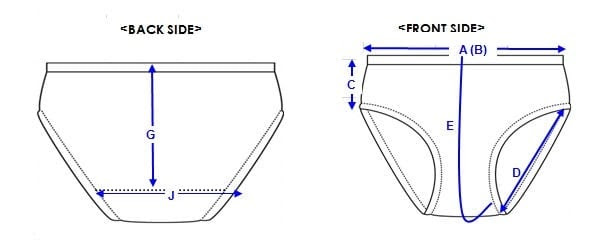
underwear design drawing
The product design can either be based on an existing ODM SKU, or an OEM specification. While you may submit, or submit, reference samples – they are only complementary to the design drawing. These are your options:
  • OEM: Design drawing submitted by the buyer
  • ODM: Design drawing submitted by the supplier
The design drawing must include all design elements and dimensions.

b. Reference sample

A reference sample is either provided by the supplier (when buying ODM products), or the buyer (when buying an OEM product). As mentioned, the reference sample is only complementary to, and not a replacement for, a design drawing.

c. Fabric

The most straightforward method is to order fabric samples, or complete units, from the supplier. The buyer can then freely select the material of choice from the supplier’s standard catalog. Another method is to submit fabric samples, that the supplier can match with a fabric from their own standard catalog – or, in rare cases, weave the fabric entirely according to the specifications of the buyer.

d. Size Table

The size table is an appendix of the design drawing, listing dimensions for each size. ODM products can also be customized by adjusting the size table accordingly. The size table must also be complemented with dimensional tolerance

e. Labels

Underwear and lingerie are subject to general textiles labelling requirements. Said labelling requirements differs between markets, and buyers are unwise to assume that the supplier is aware of the specific requirements in your market. Hence, you must provide ‘ready made’ graphical files (.aiformat) to the supplier. Include the following:
  • Label dimensions (i.e., 15 x 30 mm)
  • Country of Origin (required in the United States)
  • Washing Instructions and/or symbols
  • Batch ID
  • Logo / Website
The label can be printed on a double folded polyester patch, or directly on the inside fabric.

Quality Assurance

a. Common Quality Issues

Quality issues in textile manufacturing often stem from an incomplete or conflicting product specification. Below follows a list of common quality issues when buying Underwear and Lingerie:
  • Incorrect dimensions
  • Incorrect component position (i.e., double fabric)
  • Incorrect / low quality materials
  • Incomplete seam lines
  • Dirty and damages

b. Quality Control

The purpose of the quality inspection is to defect quality issues before the produce is packed and shipped. When buying Underwear and Lingerie from Chinese manufacturers, you must draft a Quality Inspection protocolincluding the following procedures:
  • Visual Inspection (i.e., Dirt, damages, seams and printed labels)
  • Dimensions (i.e. Double fabric length)
  • Fabric (i.e., Weight and Washing)

Compliance Testing

Underwear and lingerie are subject to various substance regulations in major markets, primarily the United States and the European Union. Depending on your market, you need to ensure compliance with one or more of the following:

a. REACH (Registration, Evaluation, Authorisation and restriction of Chemicals)

  • Country / Market: The European Union
  • Description: REACH restricts the content of restricted SVHC (Substance of very high concern) in textiles, and other consumer products, sold within the European Union. The list of SVHC includes hundreds of substances, including lead, cadmium and formaldehyde.
  • Read more: REACH Compliance Explained: What Every EU Importer Must Know

b. California Proposition 65

  • Country / Market: California, United States
  • Description: California Proposition 65 restricts more than 800 substances in consumer products. Products must either be compliant (i.e., proven rid of all restricted substances), or labelled accordingly. If your company is based in California, or if you intend to sell to buyers in the state, you must ensure compliance.
  • Read more: California Proposition 65 Compliance – What US Importers Must Know

c. FHSA (The Federal Hazardous Substances Act)

  • Country / Market: United States (All states)
    Description: FHSA restricts various substances classified as, for example, irritants or strong sensitizers. This includes, among other substances, formaldehyde – a substance used by some textile manufacturers. The full list of mandatory bans and restrictions are available on CPSC.gov.
    Read more: Regulations, Mandatory Standards and Bans (www.cpsc.gov)

Starter Package

Are you looking for reliable suppliers in China? With us, getting started is easier than ever: Click here to learn more.
 

Supplier Screening

Found a supplier on your own? Let us perform an Anti-Fraud Screening before you order: Click here to learn more.
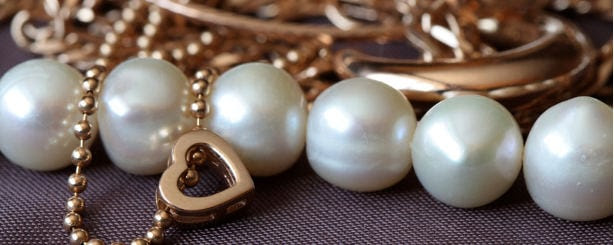
Importing Custom Designed Jewelry from China: A Complete Guide

china_jewellery
In this Product guide, we explain what you must know about buying ODM (Private label) and OEM (Custom designed) jewelry from Chinese, and other Asian, manufacturers. Keep reading, and learn more about product development, sample production and production regulations, applicable to Jewelry. We also guide you through the various labelling and testing requirements.

Product Development Process

1. Jewelry Parts Selection

Most jewelry buyers opt for factory standard components, rather than OEM (custom designed) parts. Most suppliers can, directly or through subcontractors, offer extensive jewelry part catalogs. Hence, you have the following options when designing your products:
I. ODM Products (no design changes): Base your design entirely on the supplier’s existing ODM designs
Customize an existing ODM Product: Modify an existing ODM product by adding or removing parts (i.e., custom designed labels).
II. Custom Design (using ODM parts): Jewellery can be designed ‘from scratch’ using existing ODM parts from the buyers catalog.
III. Custom Design (using OEM parts): Custom designed parts results in high tooling costs, especially when buying a large number of SKUs.
Product documentation must be prepared for each SKU. Making jewelry samples require attention to detail, and key specifications are easily lost in translation. In order to reduce the risk of an endless number of sample batches, prepare the following for all SKUs:
  • 2D Design Drawings (showing ODM parts and position)
  • ODM Parts List
  • ODM Parts Material Specifications
  • Label / Logo Badge and Part Files (.ai format)

2. Pre-Production Samples

Option A: Self Assembled Jewellery Samples

If you intend to design your own jewelry using ODM parts, you might consider buying said parts directly from the manufacturer, rather than assembled samples. This approach can save weeks, and enable you to test new designs in a highly cost efficient way.
The Self Assembled Samples shall then be returned to the suppliers, acting as Pre-Production Samples. However, make sure to order two sets of jewelry parts as you need to keep at least one piece of each SKU for your own reference.

Option B: Supplier Assembled Jewellery Samples

If you on the other hand intend to base the design on the supplier’s existing ODM samples, you should buy assembled samples, rather than ODM components. This also enables you to test the supplier’s attention to detail. However, the samples are only as good as the sample documentation. As explained in this guide, you shall expect several sample revisions before you are ready to place a first mass produced batch.

3. Mass Production and Quality Assurance
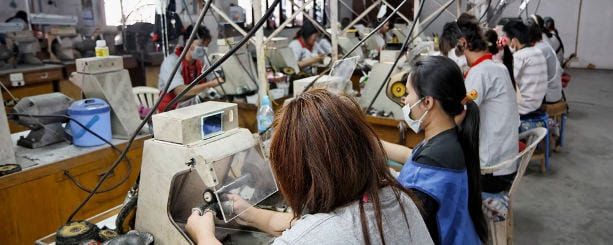
Jewellery Manufacturer in Dongguan

A. Incoming Materials & Parts Inspection

Purchasing parts and materials is the first step of the production process. As quality issues, when manufacturing jewelry, tend to stem from the production of the parts, rather than the later assembly stage, you shall consider hiring an inspector as soon as the parts arrive at the factory. Hence, quality issues can be avoided at an early stage, thereby reducing the risk of severe delays.

B. Pre-Shipment Inspection

The final, and most important, inspection shall be carried out when the products are fully assembled. Some defects, for example scratches, occur during assembly and packaging, thereby making the final, pre-shipment inspection, essential when importing jewelry from China. However, as always, clear instructions are the key to a successful outcome. Provide the quality inspection agency with all design drawings and component lists well in advance of the inspection date.

Product Regulations and Compliance Testing

1. Applicable Regulations

Jewelry is subject to various substance and ‘mechanical’ regulations in the United States, the European Union and other markets. Jewelry made for children younger than the age of 12 is also classified as a children’s product, and is therefore subject to additional regulations. The table below explains what jewelry imports in the US and EU must know:
MarketRegulationDescription
USCPSIA
The Consumer Product Safety Improvement Act (CPSIA) regulates all toys and other children’s products imported to, or made in, the United States. Visit this link to read more about importing Children’s Jewellery to the United States.
USCA Prop 65
California Proposition 65 restricts more than 800 substances in consumer products. Unlike CPSIA, which only applies to Children’s jewellery, California Proposition 65 also applies to jewelry sold to adult. Compliance is mandatory if you intend to sell in, or to buyers in, California and employ at least 10 workers. However, even if your total number of employees is less than 10, most (online and offline) retailers still require compliance with California Proposition 65.
EUREACH
REACH (Registration, Evaluation, Authorisation and restriction of Chemicals) restricts content of SVHCs in all consumer products sold in the European Union. Compliance is mandatory for all Jewellery imported to the EU.
EU
EN 14682:2007
EN 71 Part 1
EN 14682:2007 (Safety of children’s clothing. Cords and drawstrings on children’s clothing specifications) and EN 71 Part 1 restricts cord and chain length to prevent strangulation. Click here to read more.
AU/NZAS/NZS
ISO 8124.1:2002
AS/NZS ISO 8124.1:2002 regulates children’s products sold in Australia and New Zealand, including jewellery marketed to children aged 14 or younger. Click here to read more.
Buyers outside the mentioned markets, for example, in Asia, might still want to consider to ensure compliance with an EU or US standards. While many countries may not have regulations specifically for jewelry, general consumer safety regulations do apply in many Asian, South American and Eastern European markets.

2. Hallmarking and other Labelling Requirements

Platinum, Silver and gold jewelry are subject to Hallmarking requirements. Many countries have their own specific Hallmarking standards. Customs authorities are prone to checking imported precious jewelry, and improperly marked precious jewelry is likely to be seized.
Apart from Hallmarking, which doesn’t apply to non-precious jewelry (i.e., stainless steel and pearl jewelry), country of origin markings may apply.

3. Compliance Testing & Certification Requirements

Whether or not compliance testing is mandatory depends on the market and the applicable regulation / directive. Compliance testing and certification is normally mandatory when importing Children’s Jewellery. However, even when testing is not mandatory, compliance always is. Hence, the question of whether or not your company shall submit samples for testing is often a matter of risk management.
It’s also a matter of costs. Testing companies charge based on the number of samples. A necklace, for example, can consist of 5 to 10 different components and thereby result in very high testing costs.
The testing cost per SKU can range from $100 to $800, depending on the regulation and the number of different parts. Testing an entire Jewellery collection is therefore very costly. There are, however, a few strategies that can help you reduce the testing costs:
  1. Use the same Jewelry parts on as many SKUs as possible. Thereby, you reduce the number of lab tests needed to verify compliance.
  2. 2. Avoid Children’s Jewelry as the compliance testing requirements are very strict.
Your parts can either be tested according to a specific set of substances, for example, those restricted by California Proposition 65 or part of the REACH SVHC list, or specific substances (i.e., lead, nickel and cadmium). However, keep in mind that some regulations, for example CPSIA, require that each SKU is certified, rather than individual parts.

Recommended Jewelry & Accessory Trade Fairs in Mainland China and Hong Kong

Global Sources Fashion Fair

  • Location: Hong Kong
  • When: October 2015
  • Official Website: Click here

HKTDC Hong Kong International Jewellery Show

  • Location: Hong Kong
  • When: March 2016
  • Official Website: Click here

Canton Fair Phase 2

  • Location: Guangzhou
  • When: October 2015
  • Official Website: Click here


Sales Quotations: What’s Behind the Factory Price?

You are reading ChinaImportal's Newsletter!

IMPORTANT: If you don't see any images in this message, be sure to click the "Show Pictures" link in your email reader. Thanks!
Follow on LinkedIn Follow on Google Plus Follow on Facebook


Sales Quotation
The quoted price is often the final qualifying factor when selecting a manufacturer. However, there’s more to a price quotation that meets the eye. In this article, we explain what you must know before requesting a quotation from your supplier, and what you must look out for once they land in your inbox. We also answer common questions about prices set on Alibaba.com, how you know if you’re actually quoted a market price – and whether or not you should reveal your target price.

What’s in a Sales Quotation?

A unit price is based on four factors, as specified below:

a. Product Specifications

A products materials, components, functions and dimensions are, of course, defining the factory price of a product. While this is obvious, what you may not know is that most Chinese manufacturers operate as OEMs. Hence, while many suppliers can indeed provide long lists of ODM, or factory, products – they tend to lack internal quality guidelines. The buyer is expected to communicate all product specifications, even when buying ODM products.
As such, a quoted price is of no use, unless the supplier lists all specifications. Be on your guard, as they may deliberately leave gaps in the specification – in order to reduce the unit price. Whenever you do receive a price that is far lower than those quoted by competitors, the price is most likely based on an inferior product. You can only make a fair price comparison, if you do so, specification to specification.

b. Product Compliance

Manufacturing products in compliance with overseas, primarily US and EU, standards and regulations come at a cost. RoHS components are, for example, more costly than Non-RoHS components – and ensuring compliance with the EMC Directive or FCC Part 15 also adds up.
A ‘non-compliant product’ is therefore more expensive than a ‘compliant product’. And, Chinese manufacturers will not quote a price based on a compliant product, unless you communicate that this as a requirement.

c. Quantity

The larger the quantity, the lower the price. However, keep in mind that manufacturers, unlike wholesalers, operate on lower margins. They have little room for price reductions, and volume based price reductions tend to pan out once reaching four to five times the MOQ requirement.

d. Shipping Incoterm

The incoterm defines at which stage the cargo is transferred from the buyer to the supplier. The incoterm is always priced into the unit cost, and has therefore a major impact:
EXW: Buyer must arrange shipping from the factory floor, and export clearance. The manufacturer is only responsible for production and has no role in the shipping.
FOB: The supplier is responsible for shipping to the port of loading, for example Shanghai or Shenzhen, and export clearance. The buyer must arrange forwarding from the port of loading.
CIF: The supplier is responsible for shipping to the port of destination, for example San Francisco or Felixstowe. The buyer must arrange unloading and domestic forwarding.
DAP: The supplier is responsible for shipment all the way to a specific address, for example your warehouse or office.
Obviously, a quoted price based on EXW is far lower than a price based on CIF, or DAP, terms. Before you can say anything about a quoted price, you must consider the incoterm. Specify to your supplier that they must quote according to a set incoterm, in order to avoid distortion of the price data.

‘How do I know I’ve been quoted a market price?’

Assuming that you have specified all relevant technical specifications, compliance requirements, quantity and Incoterms – you will likely receive quite accurate unit prices. However, one data point is not enough to determine the market price. Instead, you must include at least 3 to 4 suppliers in your RFQ process.
Assuming you trade with regulated products (i.e., electronics, children’s products and food contact materials), you shall only include suppliers with a verified product compliance track record. You can read more about that here.
As already mentioned, be prepared to receive at least one or two quotations that are above or below the average. In most cases, a rock bottom price can be explained by one or more of the following reasons:
1. The product is not based on the same product specifications
2. The supplier did not price in your compliance requirements
3. The supplier quoted a price based on a larger quantity, than its competitors
4. The supplier quoted an EXW price
Never make a premature judgement based on a price. It’s very common that Startups and SME’s makes procurement decisions based largely on prices that aren’t real – while disqualifying good manufacturers. You simply get what you pay for.

Unit Prices at Alibaba.com

We often get questions from clients on whether they shall trust prices set by suppliers on Alibaba.com. The answer is almost always ‘no’. As explained in this article, a price is irrelevant if you don’t know what it’s based on. In addition, price ranges set by suppliers on Alibaba tend to be very wide – far wider than the actual pricing span, which is largely based on the order volume.
The problem isn’t Alibaba. It’s just that the suppliers don’t take it very seriously – as they are operating according to OEM principles. Material and component prices can change on a weekly basis. Updating prices for hundreds of ODM products is far too time consuming for the average manufacturer. That said, suppliers listed on Alibaba are, on average not better or worse than other suppliers.
Note: This is not referring to the online wholesale gateway implemented by Alibaba in 2014, which enables small volume orders directly on Alibaba.com.

‘Should we communicate our target price when ask for a quotation?’

Yes, feel free to communicate your target price, but only after careful consideration. A unit price must either be based on previous research date, for example a quotation of a related product or an outdated quote – or, based on your own margin calculations. Manufacturers have little room for price reduction, so don’t expect them to become generous simply because you give them an unrealistically low target price.
That’s not a clever tactic. You achieve nothing by setting an artificially low target price, other than disqualifying qualified suppliers. Again, you get what you pay for, and your business is always better off if you focus on increasing profit margins rather than shaving a few cents on the unit price.

Get Accurate Pricing & Product Data
From Verified Manufacturers in Asia


We help Startups & SMEs get access to accurate information on unit pricing, tooling costs and lead times, for both ODM (Private Label) and OEM (Custom Designed) products. We have solutions tailored for the following industries:
  • Apparel & Textiles
  • Watches & Accessories
  • Electronics
  • Home Products
  • Toys & Children
  • Materials, Parts & Tools